




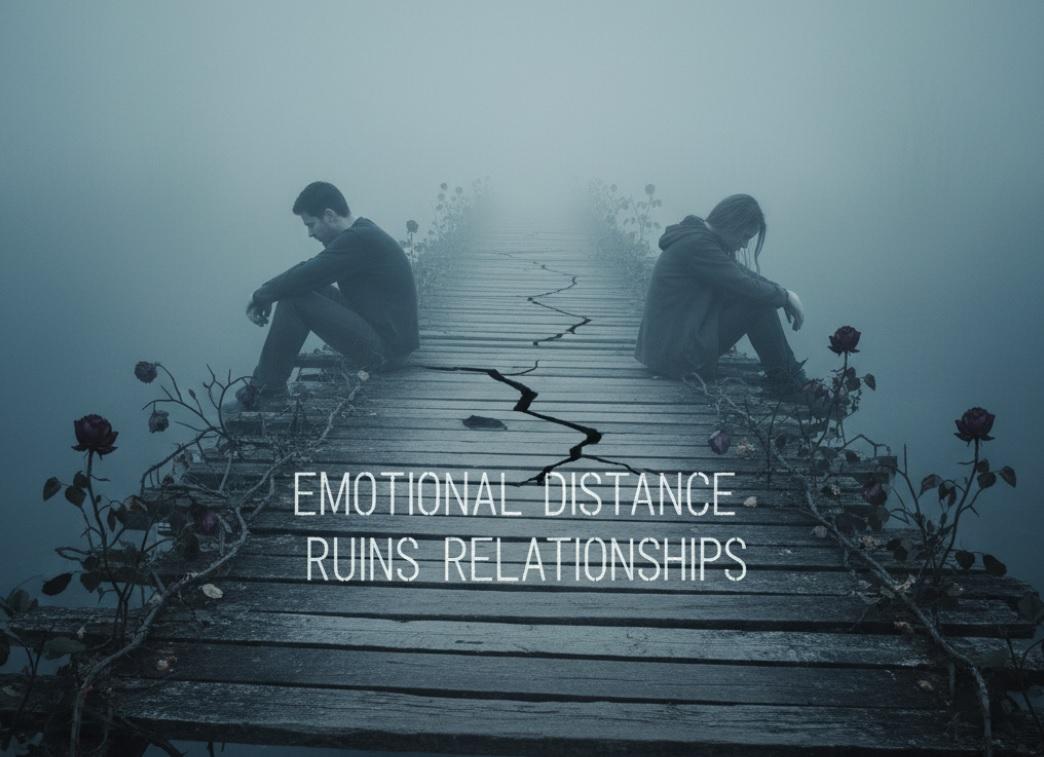
Relationships thrive on connection. When two people share their thoughts, feelings, and daily experiences, they build something strong and lasting. But when emotional distance creeps in, that connection starts to fade. You might still live under the same roof, share meals, or even raise children together, yet feel completely alone. Emotional distance doesn't always show up with loud arguments or dramatic exits. Often, it arrives quietly through silence, avoidance, or indifference. And over time, it can destroy even the healthiest relationships.
What Is Emotional Distance?
Emotional distance happens when one or both partners stop sharing their inner world. You stop talking about your worries, your dreams, or even your day. You might avoid deep conversations or pull away when your partner tries to get close. It's not about physical space-it's about the invisible wall that grows between two people.
Many people confuse emotional distance with needing personal space. Everyone needs time alone sometimes. That's healthy. But emotional distance is different. It's a consistent pattern of shutting down, turning away, or refusing to engage emotionally. You stop listening with your heart. You stop showing up as your real self.
Common Signs You're Emotionally Distant
- You rarely talk about how you truly feel.
- You change the subject when your partner brings up something serious.
- You feel annoyed or drained when your partner wants to connect.
- You spend more time on your phone, work, or hobbies than with your partner.
- You don't remember the last time you laughed together or shared something meaningful.
These signs might seem small at first. But over weeks or months, they add up. Your relationship starts to feel empty, like a shell of what it once was. For a deeper dive into this, I recommend my review of Make Him Worship You by Michael Fiore program.
Why Emotional Distance Happens
People don't usually set out to create emotional distance on purpose. It often starts as a way to protect yourself. Maybe you've been hurt before. Maybe you're afraid of conflict. Or maybe you just don't know how to express your emotions in a healthy way.
Stress plays a big role too. When work, money, or family problems pile up, it's easy to shut down. You tell yourself you're "just tired" or "too busy." But what really happens is that you stop investing in the emotional side of your relationship.
Sometimes, emotional distance grows because of unresolved issues. If you've had the same argument over and over without finding a solution, you might start to give up. Instead of working through the problem, you withdraw. You think, "Why bother?" But that choice only makes things worse.
How Emotional Distance Hurts Your Relationship
When you stop sharing your inner life, your partner starts to feel invisible. They wonder if you still care. They might try harder to connect, only to be met with silence or short answers. Over time, this leads to frustration, loneliness, and resentment.
Emotional distance also kills intimacy. Real intimacy isn't just physical-it's about feeling safe enough to be vulnerable. Without that safety, sex, affection, and even casual touch can start to feel hollow.
Trust suffers too. When you don't let your partner see your true feelings, they begin to question everything. Are you hiding something? Do you still love them? Even if you haven't done anything wrong, the lack of openness creates doubt.
Worst of all, emotional distance becomes a habit. The longer you stay closed off, the harder it is to open up again. You forget how to talk about your feelings. You forget what it feels like to truly connect. And your relationship slowly turns into a routine-two people going through the motions without real closeness.
How to Close the Gap
The good news is that emotional distance isn't permanent. If both partners are willing to try, you can rebuild that connection. It takes honesty, patience, and effort-but it's worth it.
Start Small
You don't need to pour your heart out all at once. Begin with simple, honest conversations. Tell your partner one thing that's on your mind. Ask them how their day really went-not just "How was your day?" but "What was the best or hardest part of your day?"
Listen without trying to fix everything. Sometimes, your partner just wants to be heard. Put your phone down. Make eye contact. Show that you care about what they're saying.
Be Honest About Your Feelings
If you've been distant, admit it. Say something like, "I realize I've been pulling away lately, and I'm sorry. I want to be closer to you." That kind of honesty opens the door for real change.
Don't wait for the "perfect" moment to reconnect. Start now, even if it feels awkward. Vulnerability feels risky, but it's the only way to build true closeness.
Make Time for Each Other
Life gets busy, but relationships need attention. Set aside time-just 15 or 20 minutes a day-to talk without distractions. Go for a walk together. Cook a meal side by side. Do something that lets you be present with each other.
Small moments add up. A shared joke, a hug after a long day, or remembering to ask about something your partner mentioned last week-these things rebuild trust and warmth.
Work on Yourself Too
Sometimes, emotional distance comes from your own fears or past wounds. If you struggle to open up, ask yourself why. Did someone hurt you before? Do you believe showing emotion is a sign of weakness?
Understanding your own patterns helps you break them. Talking to a counselor or therapist can give you tools to connect more deeply-not just in your current relationship, but in all your relationships.
What If Only One Person Tries?
Reconnecting takes two people. If you're the only one making an effort, it's exhausting and often frustrating. You can't force someone to open up. But you can keep showing up with kindness and honesty.
Let your partner know how their distance affects you. Use "I" statements instead of blaming. Say, "I feel lonely when we don't talk about what's going on in our lives," instead of "You never talk to me."
If your partner still refuses to engage after honest conversations and time, you may need to ask yourself hard questions. Is this relationship meeting your emotional needs? Can you be happy long-term with someone who won't let you in?
Staying in a relationship where you feel unseen or unimportant isn't fair to either of you. Sometimes, walking away is the healthiest choice.
Preventing Emotional Distance Before It Starts
The best way to deal with emotional distance is to stop it before it takes root. Make emotional connection a daily habit, not something you only think about when things go wrong.
- Check in with each other regularly-not just about logistics, but about feelings.
- Share your highs and lows, even the small ones.
- Don't let resentment build. Address small issues before they become big ones.
- Protect your relationship from outside stress. Set boundaries with work, family, or social media so your relationship stays a priority.
Think of your emotional connection like a garden. It needs regular care-watering, weeding, sunlight. Ignore it for too long, and it starts to wither.
Conclusion
Emotional distance doesn't happen overnight, and it won't disappear overnight either. But every step you take toward openness, honesty, and presence makes a difference. You don't need grand gestures. You just need to show up-with your heart, not just your body.
Ask yourself: Do you feel known in your relationship? Do you truly know your partner? If the answer is no, it's not too late to change that. Start today. Say something real. Listen deeply. Choose closeness over comfort.
Because at the end of the day, love isn't just about being together. It's about being connected.


