




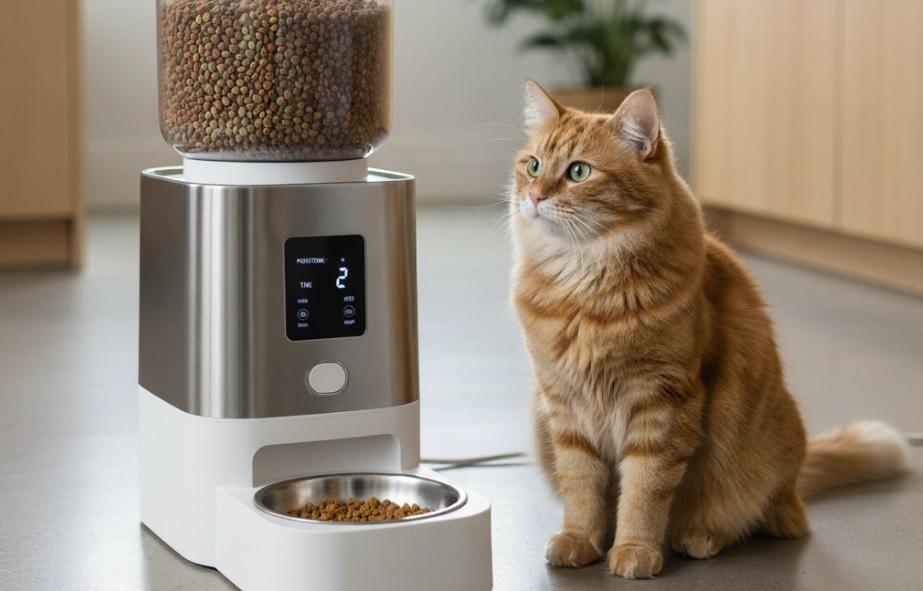
If you're busy with work, travel, or a full schedule, it can be hard to make sure your cat eats on time. Skipping a meal can stress both you and your cat. An automatic cat feeder can help by serving meals on schedule, even when you're not at home.
When choosing one, think about how much food it holds, if it works with wet or dry food, whether it keeps working during power outages, and how easy it is to clean. This guide will show you the most reliable feeders and what makes each one work well for cats and owners alike.
Why You Might Need an Automatic Cat Feeder
Some people think automatic feeders are only for people who travel a lot. That's not true. Even if you're home most of the time, a feeder can help you stick to a schedule. Cats do better with routine. Feeding them at the same time every day keeps their digestion steady and reduces stress.
You might also have a cat that eats too fast. Some automatic feeders slow down mealtime by releasing food in small portions. Others help if your cat is on a special diet and needs exact amounts at set times.
And let's be honest, sometimes you just oversleep or get stuck in traffic. With an automatic feeder, your cat won't go hungry while you're running late.
Key Features to Look For
Not all automatic cat feeders are the same. Before you buy, check these important features:
Power Source and Backup Options
Most feeders run on electricity, but what happens when the power goes out? If your feeder stops working, your cat could miss meals. Look for models that also use batteries as a backup. Some even switch to battery power automatically during outages.
If you plan to use the feeder while you're away for days, make sure the battery life lasts long enough. Check reviews to see how real users rate the reliability of the power system.
Food Capacity
How much food the feeder holds matters a lot. A small hopper might only last a day or two. If you're going away for a weekend, that won't cut it. Most feeders hold between 4 and 20 cups of dry food. Think about how much your cat eats each day and choose a size that gives you a buffer.
Keep in mind that bigger isn't always better. If you don't use the feeder every day, old food can sit too long and go stale. Dry kibble stays fresh longer than wet food, but it still loses flavor and nutrients over time.
Portion Control and Scheduling
You want to control how much your cat eats and when. Good feeders let you set multiple meals per day. Some even let you choose exact portion sizes down to the teaspoon.
Look for a clear, easy-to-use interface. If the buttons are confusing or the screen is too small, you might program the wrong amount by mistake. A few models connect to your phone through an app, which makes scheduling even easier-but that's not necessary for everyone.
Compatibility with Wet Food
Most automatic feeders work only with dry food. The moisture in wet food can clog the mechanism or cause mold. If your cat eats wet food, you'll need a special type of feeder-usually one with refrigerated compartments or ice packs.
These models are more expensive and harder to clean, but they're worth it if your cat can't eat dry food. Always check the product description carefully to see if wet food is supported.
Ease of Cleaning
Food gets stuck. Crumbs collect in corners. If the feeder is hard to take apart, you'll avoid cleaning it-and that's bad for your cat's health. Look for models with removable parts that are dishwasher-safe or easy to wipe down.
A smooth interior with no hidden gaps helps prevent bacteria buildup. Also, check if the food hopper is transparent. That way, you can see when it's getting low without opening it.
Pet-Proof Design
Cats are clever. Some will figure out how to knock the feeder over or paw at it until extra food spills out. A heavy base or non-slip feet can help. Some feeders even have a lock on the food compartment to stop sneaky pets.
If you have more than one cat, and one eats more than its share, look for feeders with microchip or RFID readers. These only open for the cat wearing the right collar tag.
Types of Automatic Cat Feeders
There are three main types. Each has pros and cons depending on your situation.
Gravity Feeders
- Simple design: food flows down as your cat eats
- No power needed
- Always full-good for free-feeding
- No portion control
- Not ideal for cats on a diet
Gravity feeders are cheap and reliable, but they don't schedule meals. They're best for cats that regulate their own eating well.
Timed Mechanical Feeders
- Use a rotating tray or dispenser
- Set meals in advance
- Good portion control
- Usually for dry food only
- Need power or batteries
These are the most common type. They're great for daily use and short trips. Just make sure the timer is accurate and the motor is quiet-some cats get scared by loud noises.
Smart Feeders
- Connect to Wi-Fi or Bluetooth
- Control from your phone
- Some include cameras or voice recording
- Higher price
- May need updates or troubleshooting
Smart feeders give you the most control, especially if you're away for long periods. But they can be overkill if you just need basic scheduling. Also, if your internet goes down, some features might stop working.
Common Mistakes to Avoid
Buying an automatic feeder seems straightforward, but people often make these errors:
- Ignoring your cat's eating habits. If your cat is picky or slow to adapt, a noisy or unfamiliar feeder might scare them off.
- Choosing based on looks alone. A sleek design won't help if the hopper jams or the timer resets easily.
- Forgetting about maintenance. A feeder that's hard to clean will get gross fast-and your cat might refuse to eat from it.
- Assuming all dry food works the same. Large kibble or oddly shaped pieces might not flow smoothly through the dispenser.
Always read real customer reviews before buying. Look for comments about reliability over time, not just first impressions.
How to Introduce Your Cat to a New Feeder
Even the best feeder won't help if your cat won't use it. Take it slow:
- Place the feeder next to your cat's usual bowl for a few days-turned off.
- Put some food in it manually so your cat gets used to eating from it.
- Once they're comfortable, turn it on with a small test portion.
- Stay nearby during the first few automatic feedings to reassure them.
Some cats take to it right away. Others need a week or more. Be patient. Never force them.
Top Tips for Long-Term Use
- Clean the feeder at least once a week, even if it looks clean.
- Check the batteries monthly if you use them as backup.
- Store extra food in an airtight container to keep it fresh before loading the hopper.
- Test the timer function before you leave town-don't wait until you're already gone.
- Keep a manual bowl nearby for emergencies, just in case.
A little care goes a long way. A well-maintained feeder can last for years.
Conclusion
An automatic cat feeder can make your life easier and your cat healthier. Think about your schedule, your cat's needs, and your home setup. Don't chase fancy features you won't use. Focus on reliability, ease of use, and safety.
Remember, this device is a tool, not a replacement for your attention. Your cat still needs your love, playtime, and regular check-ins. But with a good feeder, you can rest easier knowing their meals are covered, even when you're not around.
Frequently Asked Questions (FAQ)
Can I use an automatic feeder for wet food?
Only if the model is designed for it. Most standard feeders work with dry kibble only. Look for feeders with cooling systems or sealed wet-food trays if your cat eats canned food.
How long can I leave my cat with an automatic feeder?
For dry food, most feeders can support 3-7 days, depending on capacity and your cat's appetite. Always test it first. Never leave your cat alone for more than a few days without someone checking in.
Will my cat figure out how to trick the feeder?
Some clever cats learn to paw at the dispenser or tip it over. Choose a heavy, stable model with a secure lid. If you have a food-motivated cat, consider a microchip-activated feeder.
Do automatic feeders make noise?
Yes, most make a soft whirring or clicking sound when dispensing food. Some cats get startled at first. Try running it during the day a few times before using it while you're away.
Are smart feeders worth the extra cost?
Only if you need remote access or live video. If you just want scheduled meals, a basic timed feeder works fine and costs less.
Can I use an automatic feeder for kittens?
Yes, but make sure the portion sizes can be adjusted very small. Kittens eat more frequently and in smaller amounts than adult cats. Check that the feeder allows enough meals per day.


