




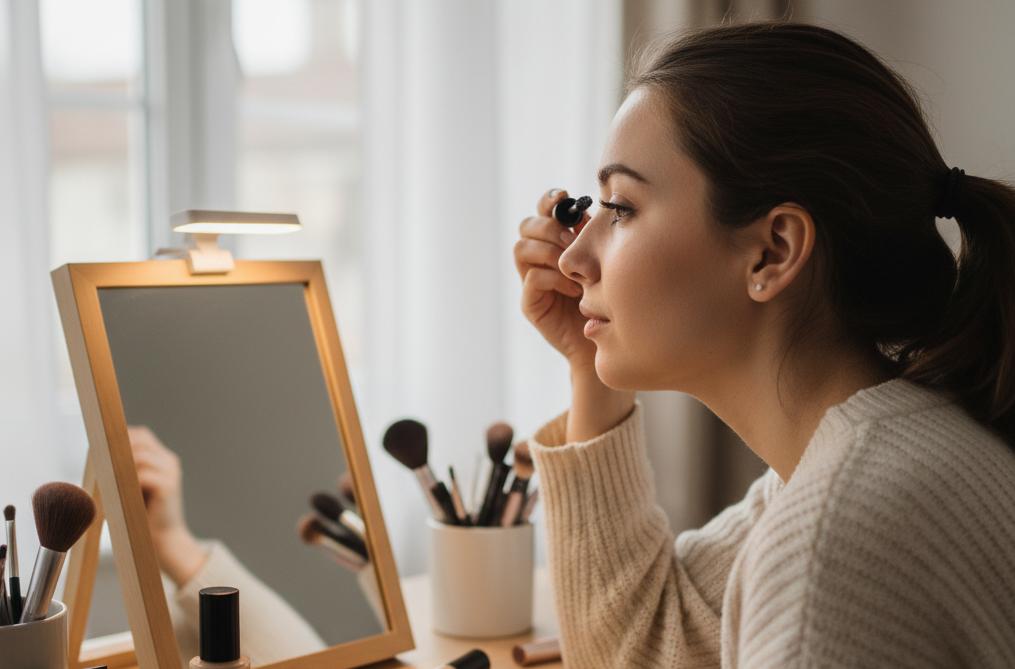
With so many mascaras on the market, it's hard to know which one will really work for you. Some add length, others volume, and some give a dramatic curl but the right one depends on your lashes, your routine, and even the weather. This guide makes it easy to understand what matters, so you can find a mascara that gives you the look you want.
Understand Your Lash Goals
Before you pick up a tube, ask yourself what you really want your lashes to do. Do you want them to look longer? Fuller? More lifted? Or maybe just neatly defined? Different mascaras are designed for different results.
- Lengthening mascaras usually have lightweight formulas and thin wands that separate lashes while stretching them out.
- Volumizing mascaras contain waxes and polymers that build up on lashes, making them look thicker.
- Curling mascaras often dry quickly and hold a bend, especially when used with an eyelash curler first.
- Defining mascaras focus on separating each lash without clumping-great for a natural daytime look.
- Waterproof mascaras stay put through sweat, tears, or rain but can be harder to remove.
Many products combine two or more of these benefits. That's fine-but know your main goal so you don't end up with a mascara that does everything except what you actually need.
Know Your Lash Type
Your natural lashes play a big role in how mascara performs. Take a close look in the mirror. Are your lashes short? Straight? Sparse? Fine? Thick? Each type responds differently to formulas and brushes.
Short or sparse lashes
If your lashes don't have much length or density, look for a lengthening or volumizing formula with a small, tapered brush. These wands reach the tiniest lashes at the inner and outer corners of your eyes. Fibers in the formula can also help add the illusion of fullness-but be careful. Too many fibers can flake off during the day.
Straight or downward-pointing lashes
These lashes need serious curl support. Choose a waterproof or "tubing" mascara. These types set quickly and lock lashes in place. Always curl your lashes with a metal clamp-style curler before applying mascara for best results.
Long but fine lashes
You're lucky-you already have length! Focus on definition and subtle volume. A defining or lengthening mascara with a comb-like wand will keep your lashes separated and fluttery without weighing them down.
Thick or coarse lashes
Your lashes can handle heavier formulas. Go for bold volumizing mascaras with thick brushes. Just avoid overloading them-too much product can cause clumping or make lashes stick together.
Brush Shape Matters More Than You Think
The wand (or brush) inside the tube is just as important as the formula. It controls how much product you pick up and how it's distributed on your lashes.
- Straight brushes work well for overall application and are common in volumizing mascaras.
- Curved brushes hug the lash line and help lift lashes upward as you apply.
- Tapered or skinny brushes are perfect for lower lashes and hard-to-reach inner corners.
- Spiral brushes with short bristles separate and define without adding too much bulk.
- Comb-style brushes are great for removing clumps and giving a clean, feathery finish.
Try to match the brush shape to your lash goals. If you want drama, go bold. If you prefer a natural look, choose precision over volume.
Formula Types Explained
Mascara formulas fall into a few main categories. Understanding them helps you avoid irritation, smudging, or flaking.
Regular (washable) mascara
This is the most common type. It's easy to apply, easy to remove with warm water or gentle cleanser, and usually feels light on the lashes. Ideal for everyday wear or if you have sensitive eyes.
Waterproof mascara
Designed to resist moisture, this type stays put through humidity, tears, or workouts. The trade-off? It requires an oil-based makeup remover to take off. Over time, tugging to remove it can weaken lashes, so use it only when necessary.
Tubing mascara
This newer type coats each lash in tiny "tubes" of polymer. It doesn't smudge, flake, or transfer-and it comes off easily in warm water without scrubbing. Great for people with oily skin, sensitive eyes, or those who hate raccoon eyes by midday.
Natural or clean mascaras
These avoid harsh chemicals like parabens, sulfates, or synthetic dyes. They often include nourishing ingredients like beeswax, vitamin E, or plant oils. While they may not deliver extreme volume or length, they're gentler for daily use and better for lash health over time.
Color Choices Beyond Black
Black is classic and gives the most dramatic contrast, especially on dark hair. But it's not your only option.
- Brown or brown-black looks softer and more natural-perfect for fair skin, light hair, or daytime makeup.
- Deep blue or navy adds subtle dimension and can make eyes appear brighter without looking "costume-y."
- Colored mascaras (purple, green, burgundy) are fun for special occasions but rarely work for everyday wear unless you're going for a bold look.
If you're new to mascara, start with black or brown-black. You can always experiment later.
How to Test a Mascara Before Buying
Not every store lets you sample, but if you can, here's what to check:
- Swipe the wand on the back of your hand. Does it feel too wet? Too dry? A good formula should be smooth but not runny.
- Look at the brush. Is it the right size and shape for your eyes?
- If you have sensitive eyes, check the ingredient list for common irritants like fragrance or alcohol.
When buying online, read recent reviews from people with similar lash types. Pay attention to comments about flaking, smudging, or how long it lasts through the day.
Common Mistakes to Avoid
Even with the right mascara, small errors can ruin your look.
- Pumping the wand in and out of the tube. This pushes air inside, drying out the formula faster. Instead, twist the wand gently against the opening to remove excess.
- Applying too many coats too quickly. Let the first coat dry slightly before adding a second. Otherwise, you'll get clumps.
- Ignoring your lower lashes. A light coat on the bottom lashes balances your eyes-but use a clean wand or a smaller brush to avoid smudging.
- Keeping mascara too long. Replace it every 3 months. Old mascara can harbor bacteria and cause eye infections.
Pro Tips for Better Application
How you apply mascara matters just as much as what you use.
- Start at the base of your lashes and wiggle the wand slightly as you move upward. This builds volume at the roots.
- For extra curl, hold the wand at the tips of your lashes for a few seconds after applying.
- Use a clean spoolie brush afterward to separate any clumps and soften the look.
- If you wear contact lenses, apply mascara after inserting them to avoid getting product in your eyes.
Conclusion
The best mascara isn't the one everyone talks about or the one in the fanciest packaging. It's the one that suits your natural lashes. Try a few different types until you find the one that works for you. And remember - healthy lashes come from gentle care, not just the product.
Frequently Asked Questions (FAQ)
How often should I replace my mascara?
Every 3 months. After that, it dries out and can collect bacteria, which may lead to eye infections.
Can I use waterproof mascara every day?
It's better to avoid it for daily wear. The removal process can stress your lashes. Save it for events, hot days, or when you expect to cry or sweat.
Why does my mascara flake by midday?
Flaking usually happens when the formula is too dry, too old, or layered too thickly. Try a fresher tube or a tubing formula, which rarely flakes.
Is it okay to curl my lashes after applying mascara?
No. Always curl before. Curling after can snap your lashes or pull off the mascara in clumps.
Can I layer different mascaras?
Yes! Many makeup artists do this. For example, apply a lengthening mascara first, then a volumizing one on top. Just let the first coat dry slightly to avoid clumping.
What if I have very sensitive eyes?
Look for hypoallergenic, fragrance-free, and ophthalmologist-tested formulas. Tubing mascaras are often gentler and easier to remove without rubbing.


