




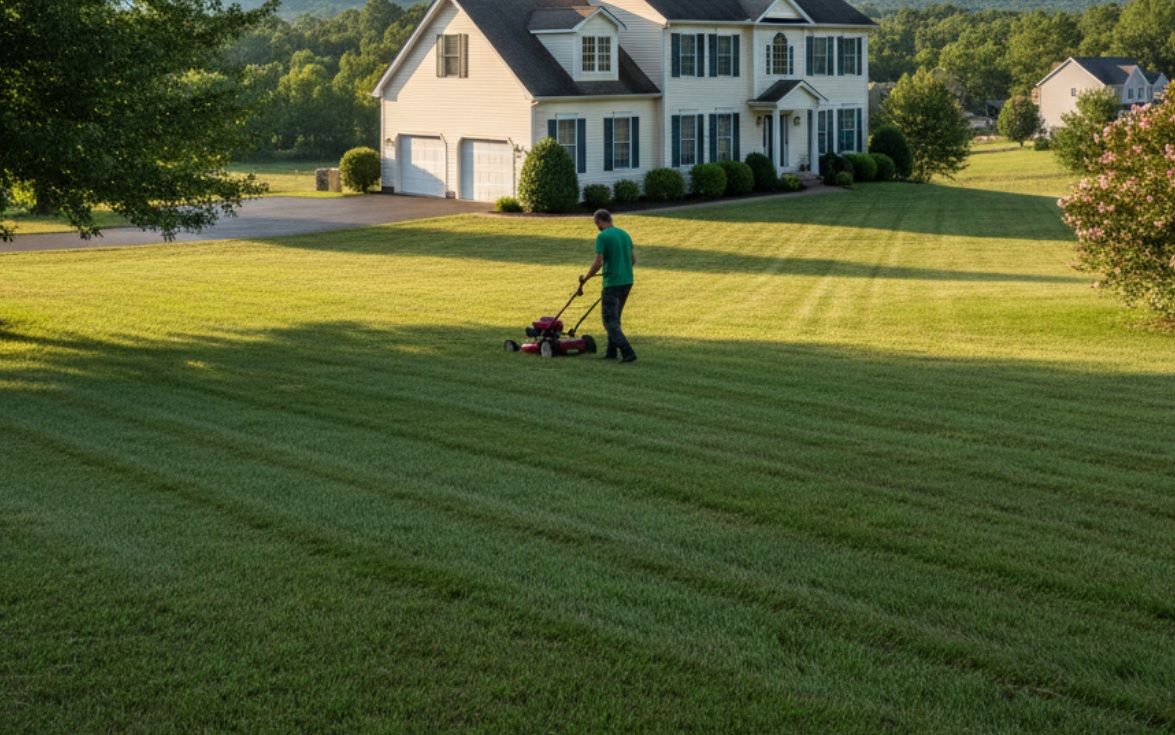
A good lawn mower makes yard work much easier. From small push mowers to bigger ride-on models, each has its strengths. This guide helps you understand the options and choose one that works for the size of your lawn and the way you like to mow.
Know Your Lawn First
Before you even look at mowers, take a good look at your yard. The size, shape, and terrain matter more than you might think.
- Small yards (under 1/4 acre): A push mower or electric model usually does the job quickly and easily.
- Medium yards (1/4 to 1/2 acre): You might want something with a bit more power-maybe a self-propelled gas mower or a cordless electric.
- Large yards (over 1/2 acre): Riding mowers or zero-turn models save time and energy.
Also consider hills, trees, flower beds, and tight corners. A big riding mower won't help if your yard is full of obstacles. A smaller, more agile mower might be better.
Types of Lawn Mowers Explained
There are four main types of lawn mowers. Each has strengths and weaknesses depending on your needs.
Push Mowers (Manual)
These are the simplest mowers. You walk behind them and push with your own power. They have no engine-just blades that spin as you move forward.
Best for very small, flat lawns with short grass. They're quiet, eco-friendly, and need almost no maintenance. But they won't cut tall or thick grass well, and they require more physical effort.
Gas-Powered Walk-Behind Mowers
These are the most common mowers in many neighborhoods. They run on gasoline and come in two styles: standard push and self-propelled.
Standard push models need you to do all the walking and pushing. Self-propelled versions have a drive system that moves the mower forward-you just steer. Both handle thick or tall grass better than electric models and work well on slopes.
Downsides? They're louder, need regular oil and filter changes, and you have to store gasoline safely.
Electric Mowers (Corded and Cordless)
Electric mowers are quieter, cleaner, and easier to start than gas models. There are two kinds:
- Corded electric: You plug it into an outlet. Great for small yards, but the cord limits your range and can be a tripping hazard.
- Cordless (battery-powered): These run on rechargeable batteries. No cords, no fumes, and they start with a button. Battery life has improved a lot-many now last 45-60 minutes on a single charge.
Electric mowers work best on flat, medium-sized lawns with regular mowing. They struggle with very tall or wet grass.
Riding Mowers and Zero-Turn Mowers
If your yard is half an acre or bigger, a riding mower saves serious time and effort. You sit on it like a small tractor and drive it around.
Traditional riding mowers are easy to use and good for large, open lawns. They usually have a turning radius of 16-20 inches.
Zero-turn mowers pivot on the spot, making them super agile around trees, flower beds, and corners. They cut faster and leave cleaner lines, but they cost more and take practice to drive smoothly.
Both types need garage or shed space and regular maintenance like oil changes, air filter cleaning, and blade sharpening.
Key Features to Consider
Once you've picked a type, look at these practical features to narrow your choice.
Cutting Width
This is how wide a path the mower cuts in one pass. Wider decks mean fewer passes and less time mowing.
- Push mowers: 16-22 inches
- Self-propelled: 20-22 inches
- Riding mowers: 30-54 inches
Don't go too wide for your yard. A 54-inch deck won't fit through a narrow gate or between garden beds.
Height Adjustment
Grass should be cut at the right height for its type-usually 2.5 to 4 inches. Look for a mower with easy-to-use height settings. Some have a single lever; others need you to adjust each wheel. Single-lever systems are much more convenient.
Bagging, Mulching, or Side Discharge?
Most mowers offer at least two of these options:
- Bagging: Catches clippings in a bag. Good if you compost or want a super-clean look.
- Mulching: Chops grass into fine pieces and drops them back on the lawn. Feeds the soil and reduces waste.
- Side discharge: Shoots clippings out the side. Best for tall grass but can leave clumps.
A "3-in-1" mower lets you switch between all three-very handy.
Weight and Maneuverability
Heavier mowers often cut better but are harder to turn or push. If you have slopes, tight spaces, or physical limits, look for lighter models or ones with good wheel design (like larger rear wheels for better balance).
Battery Life (for Cordless Models)
If you go cordless, check the battery voltage (usually 40V to 80V) and runtime. Higher voltage often means more power, but runtime depends on grass thickness and cutting height. Some brands sell extra batteries so you can swap and keep going.
How Much Should You Spend?
Lawn mowers range from under $100 to over $5,000. Here's a realistic breakdown:
- $100-$250: Basic push or small electric mowers. Good for tiny lawns.
- $250-$500: Quality self-propelled gas or mid-range cordless mowers. Best value for most homeowners.
- $500-$1,500: Premium walk-behind mowers or entry-level riding mowers.
- $1,500-$5,000+: High-end zero-turn or large riding mowers with advanced features.
Don't just pick the cheapest option. A reliable mower that lasts 5-10 years is better than replacing a flimsy one every two years.
Brands Worth Considering
Some brands consistently deliver solid performance and customer support:
- Honda: Known for reliable, long-lasting gas engines.
- EGO, Greenworks, Ryobi: Top choices for cordless electric mowers.
- John Deere, Cub Cadet, Toro: Trusted names in riding and zero-turn mowers.
- Snapper, Craftsman: Offer good value across different types.
Read recent reviews and check warranty terms. A 2-5 year warranty shows the company stands behind its product.
Maintenance Tips to Extend Your Mower's Life
Even the best mower won't last if you ignore basic care. Here's what to do:
- Sharpen blades at least once a season. Dull blades tear grass instead of cutting it, which stresses your lawn.
- Change oil and air filters (for gas models) every 50 hours of use or once a year.
- Clean the underside after each use to prevent grass buildup and rust.
- Store batteries indoors during winter if you live in a cold climate.
- Drain fuel or add stabilizer before long storage periods.
A few minutes of care each month can add years to your mower's life.
Checklist
Ask yourself these questions before making a purchase:
- How big is my lawn?
- Is it flat or hilly?
- How much time do I want to spend mowing?
- Do I have storage space?
- Am I okay with gas maintenance, or do I prefer electric simplicity?
- What's my realistic budget-including future maintenance?
Answering these honestly will point you to the right type and model without buyer's remorse.
Frequently Asked Questions (FAQ)
What's the easiest lawn mower to use?
For small yards, a cordless electric push mower is the easiest-lightweight, quiet, and starts with a button. For large yards, a self-propelled gas mower or a riding mower reduces physical effort.
How often should I mow my lawn?
Most lawns need mowing once a week during the growing season. Never cut more than one-third of the grass height at a time to keep your lawn healthy.
Can I use a riding mower on a sloped yard?
It depends on the slope. Most manufacturers warn against using riding mowers on slopes steeper than 15 degrees due to tipping risks. For hills, a walk-behind mower is safer.
Are battery-powered mowers powerful enough?
Modern battery mowers are much stronger than older models. They handle regular mowing on flat to gently sloped lawns very well. But they may struggle with very tall, thick, or wet grass.
How long do lawn mower batteries last?
Most lithium-ion batteries last 3-5 years or 300-500 charge cycles. Runtime per charge is usually 30-60 minutes, depending on conditions.
Should I mulch or bag my grass clippings?
Mulching is better for your lawn-it returns nutrients to the soil. Only bag clippings if the grass is very tall, wet, or if you're dealing with disease or weeds you don't want to spread.


