




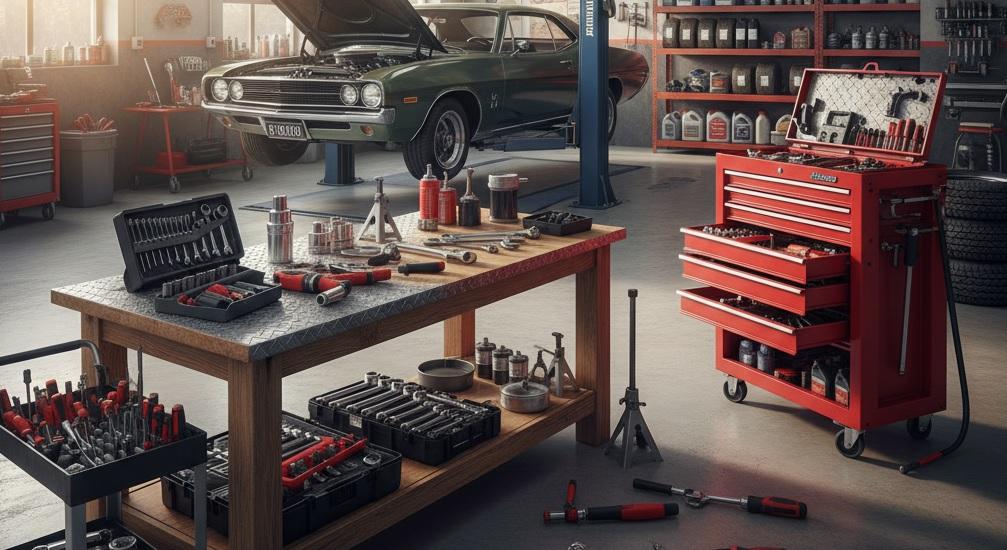
Keeping your car in good shape doesn't always mean driving it to a mechanic. With the right set of tools and a little know-how, you can handle many basic repairs and maintenance tasks yourself. Whether you're changing oil, replacing brake pads, or just checking tire pressure, having a solid collection of garage tools makes the job easier, faster, and often cheaper.
This guide walks you through the essential tools you need for regular car care. You'll learn what to buy first, what can wait, and how to choose quality without overspending. No fluff-just practical advice for real people who want to keep their cars running smoothly.
Start With the Basics
Before you fill your garage with every tool imaginable, focus on the fundamentals. These are the items you'll reach for again and again, no matter what kind of car you drive.
Socket Wrench Set
A socket wrench set is the backbone of any home garage. It lets you remove and tighten nuts and bolts quickly and with less effort than a standard wrench. Look for a set that includes both metric and standard sizes, since cars use both depending on the make and model.
- Choose a ratcheting wrench with a smooth action.
- Get a range from 8mm to 19mm (or 5/16" to 3/4") to cover most jobs.
- Extensions and a universal joint help you reach tight spots.
OBD2 Scanner
If your "Check Engine" light comes on, an OBD2 scanner saves you a trip to the shop just to read the code. Plug it into the port under your dashboard, and it tells you what's wrong in plain language.
You don't need the most expensive model. A basic Bluetooth or USB scanner that works with your smartphone or laptop is enough for most drivers. Just make sure it's compatible with your car's year and brand.
Torque Wrench
Some bolts need to be tightened just right-not too loose, not too tight. That's where a torque wrench comes in. It's essential for jobs like installing wheels, spark plugs, or timing components.
Click-type torque wrenches are affordable and reliable. Set the desired torque, tighten until you hear the click, and stop. Over-tightening can strip threads or warp parts, so this tool pays for itself in avoided damage.
Fluids and Filters: The Routine Workhorses
Changing your own oil, air filter, or cabin filter is one of the easiest ways to save money and keep your engine healthy. You don't need fancy gear-just a few key items.
Oil Drain Pan
Don't pour old oil on the ground or into the trash. Use a proper drain pan with a spout for clean pouring into a recycling container. A pan that holds at least 10 quarts gives you room to work without spills.
Oil Filter Wrench
Oil filters can be stubborn. A strap-style or cap-style oil filter wrench grips the filter firmly so you can twist it off without burning your hands on hot metal. Keep one in your toolbox-it's worth the few dollars.
Funnels
A simple funnel prevents spills when you're adding new oil, coolant, or washer fluid. Get one with a long, flexible neck. It helps you pour cleanly into tight filler holes without making a mess on the engine.
Brakes, Tires, and Suspension
Your safety depends on these systems. While major brake or suspension repairs might need a pro, you can inspect and replace parts yourself with the right tools.
Jack and Jack Stands
Never work under a car supported only by a jack. A hydraulic floor jack lifts the car quickly, but you must use jack stands to hold it safely in place.
- Choose a jack rated for your vehicle's weight (most cars need 2-3 tons).
- Get a pair of sturdy jack stands with a similar weight rating.
- Always place them on solid, level ground and double-check stability before crawling underneath.
Tire Pressure Gauge
Underinflated tires waste fuel and wear out faster. A digital or dial-type tire pressure gauge gives you an accurate reading every time. Skip the gauges built into air pumps at gas stations-they're often off by several PSI.
Brake Caliper Tool
When replacing brake pads, you often need to compress the caliper piston to make room for the new, thicker pads. A brake caliper compression tool does this safely without damaging the piston or brake lines.
Some kits include adapters for different caliper designs. It's a small investment that prevents headaches during brake jobs.
Electrical and Diagnostic Tools
Modern cars rely heavily on electronics. Even simple tasks like replacing a fuse or testing a battery require basic electrical tools.
Multimeter
A multimeter measures voltage, current, and resistance. Use it to check if your battery is holding a charge, test fuses, or trace wiring problems.
You don't need a lab-grade device. A $20-$30 digital multimeter with auto-ranging and a clear display handles 95% of home garage needs.
Test Light
Sometimes a simple test light is faster than a multimeter. Clip it to ground, touch the probe to a wire or terminal, and if the bulb lights up, you've got power. Great for quick checks of switches, relays, or fuse boxes.
Fuse Puller
Most fuse boxes include a tiny plastic fuse puller, but it's easy to lose. Keep a spare in your glove box or toolbox. It makes removing and replacing fuses much easier than using your fingers or pliers.
Hand Tools You'll Use Every Time
These might seem obvious, but skipping them leads to frustration. Build your collection slowly, but don't ignore the basics.
Screwdrivers
Get a set with both flathead and Phillips tips in multiple sizes. Many cars still use screws for trim panels, battery covers, and fuse boxes. A magnetic tip helps hold small screws in place.
Pliers
Needle-nose pliers reach into tight spaces. Slip-joint pliers grip bolts or hoses. And don't forget hose clamp pliers-they make radiator and heater hose work much easier.
Allen and Torx Keys
More and more cars use Allen (hex) or Torx bolts, especially on interior trim and modern engines. A set of L-shaped keys or a bit set for your ratchet covers these fasteners without rounding them off.
Storage and Organization
A tool is only useful if you can find it. A messy garage slows you down and leads to lost or damaged gear.
Tool Chest or Roll Cabinet
Start small. A 3-drawer metal cabinet or a portable tool bag keeps things tidy. As your collection grows, consider a full roll-around cabinet with a top chest. Look for ball-bearing drawers-they slide smoothly even when full.
Socket and Bit Organizers
p>Keep sockets, wrenches, and bits in labeled trays or foam inserts. You'll spend less time hunting and more time fixing.
What You Can Skip (For Now)
You don't need everything on day one. Some tools are only useful for advanced jobs or specific repairs.
- Impact Wrench: Great for tire changes, but a breaker bar works fine for occasional use.
- Engine Hoist: Only needed if you plan to pull an engine-most people never do.
- Oscilloscope: Overkill unless you're diagnosing complex sensor issues.
Buy tools as you need them. If a repair calls for a special tool, consider renting it or borrowing from a friend before buying.
Quality vs. Price: Finding the Balance
You don't have to buy the most expensive brand, but avoid the cheapest no-name sets. Poor-quality tools strip bolts, break under pressure, or wear out fast.
Look for brands known for reliability: Craftsman, GearWrench, Tekton, Kobalt, or Husky. Many offer lifetime warranties-if a wrench bends or a socket cracks, they'll replace it for free.
Read user reviews, especially from people who use the tools regularly. A $50 socket set that lasts 10 years is cheaper than a $20 set you replace every two.
Safety First
Working on your car can be safe if you follow a few simple rules:
- Always disconnect the battery before working on electrical systems.
- Wear safety glasses-metal shavings and fluid splashes hurt.
- Use gloves to protect your hands from oil, grease, and sharp edges.
- Never start the engine with the car on jack stands.
Taking a few extra seconds to stay safe prevents trips to the emergency room.
Final Tips for New DIYers
Start with small jobs. Change your oil, rotate your tires, or replace wiper blades. Each success builds confidence for bigger tasks.
Watch video tutorials from trusted sources. Seeing a repair done step-by-step helps you understand what tools you'll really need.
Keep a notebook or phone note of what you've done, when you did it, and what parts or fluids you used. It helps with future maintenance and resale value.
Most importantly, don't rush. Good work takes time. Rushing leads to mistakes, stripped bolts, or worse.
Frequently Asked Questions (FAQ)
Do I need both metric and standard sockets?
Yes. Most modern cars use metric fasteners, but older American models and some components (like trailer hitches) still use standard (SAE) sizes. A combo set covers all bases.
Can I use a regular wrench instead of a socket wrench?
You can, but it's slower and harder in tight spaces. Socket wrenches with ratchets let you turn bolts with small movements, which is a huge time-saver.
How often should I change my oil if I do it myself?
Check your owner's manual. Most cars today recommend oil changes every 5,000 to 7,500 miles, or once a year if you drive less. Synthetic oil lasts longer than conventional.
Is an OBD2 scanner worth it for occasional use?
Absolutely. Even if you only use it once a year, it can save you a $50-$100 diagnostic fee at the shop. Basic models cost under $30.
What's the most important safety rule when working under a car?
Never rely on a jack alone. Always use jack stands rated for your vehicle's weight, and double-check that the car is stable before getting underneath.
Should I buy cordless or manual tools?
For most home garage tasks, manual tools are fine. Cordless impact wrenches are handy for tire changes, but they're not essential unless you do a lot of work. Start with hand tools-you'll learn more about your car that way.


