




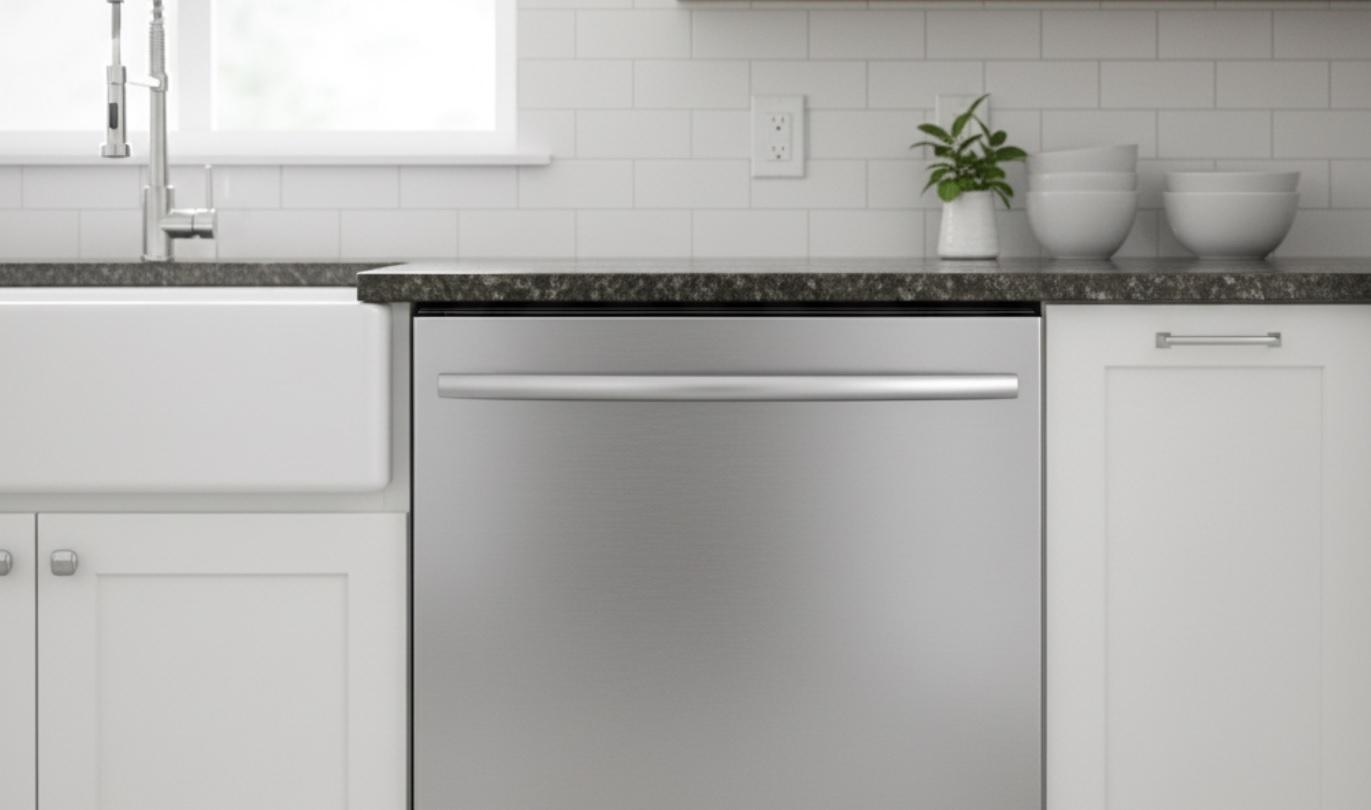
These days, dishwashers are all the rage. When was the last time you were in a house that didn't have one? After all, cleaning up food residue behind is time-consuming, long, and just plain icky. When given the chance to buy such an appliance, most people will take that chance. However, the problem is, it's not always easy to know which dishwasher you have to buy it. There are so many makes and models that are offered on the market these days. There are different sizes of dishwashers, they're made of different materials, they serve different purpose. Getting a new dishwasher can be very confusing. Plus, if you make a mistake, well, that's a lot of money to spend on a mistake, especially since not all models can be refunded.
If you're having doubts about which dishwasher you should buy or if you need a new dishwasher at all, we have several tips and tricks to help you along the way. In this article, we'll talk about the different types of dishwashers, their different purposes, and the many, many factors you need to take into account when you want to (or need to) replace your current machine.
Do You Need a New dishwasher?
The first thing to ask yourself is if you need a new dishwasher in the first place. Is your current dishwasher broken? If so, you ought to see if you can repair it. Repairing a dishwasher is often much cheaper than buying a new model. If it's not broken, you need to think carefully about the reasons you want a dishwasher. Dishwashers can last several years before they need to be replaced. If you've had one for less than 10 years, and your dishes are still as clean as ever, then you might need to reconsider. Getting a dishwasher just because you feel like you've had the same model long enough is costly and not exactly good for your carbon footprint.
Before you start thinking about which dishwasher you need to buy, consider the reasons why you need to buy one. Maybe your old unit broke. Maybe you're moving into a smaller space. Or maybe you just feel that it's high time to get a new dishwasher. After all, most households replace their dishwashers every 15 years or so. Any longer, and you run the risk of the dishwasher not working very well not cleaning dishware properly, making very loud noises, or stopping unexpectedly. Not to mention, plates cleaned by a very old dishwasher will eventually start to smell permanent.
What are other good reasons to get a new dishwasher? Some examples are: you're moving into a new house or if you're remodeling your kitchen. You might need a new one if your old one has stopped working and it would be too costly to replace it (as you can get decent-quality dishwashers for as little as 600$). You might also need a new one if you're downsizing your kitchen to expand your dining room or living room. Of course, if your dishes now emerge from your current model dirtier than they were before, then it's high time to get a new one.
Things to Take Into Account
Now that you know you want to get a dishwasher, what do you need to take into account? Well, first of all, what are you going to do with the old one? Will you throw it away, or recycle it? If it's a portable model, you can also give it to someone else.
So, are you sure that you need to buy a new dishwasher? All right! Without further ado, here’s a list of factors you ought to keep in mind when you're shopping.
Features
Many dishwashers offer special features. For example, some dishwashers have advanced water filtration systems. These are so efficient that they can effectively remove food particles from the water. Other dishwashers used strategically positioned water jets and nozzles to improve how many this machine can clean, but without increasing the amount of water that's being used.
Some dishwashers also feature an entire safety functionality specifically, a drip pan. The drip pan is used to contain the water in the event of an internal leak. As a result, wood floors will not be damaged. Moreover, sensors will shut down the machine when it is experiencing these kinds of problems. Some dishwashers have fans that will dry your dishes more efficiently without needing to heat them.
Many dishwashers come with included food dispensers, which will relieve you of the need to rinse dishes in the sink before you pop them into the dishwasher. These are beneficial for your carbon footprint because you'll use less water.
Modes
You also need to consider the kind of modes a dishwasher offers. Many dishwashers offer a request hold cycle. These cycles let you rinse dishes before you can wash them. However, this mode does increase water use and is not recommended unless it's necessary. The common-mode includes the one-hour wash, the smart wash, and the quick rinse.
Many dishwashers also offer modes that are specialized to accommodate people who have allergies. During this mode which is known as a Sanitize Rinse Cycle (alternatively, “Sani Rinse”)—the water reaches a temperature of 160 degrees or more. This temperature is held for several minutes so that the dishes are properly sanitized. In addition to being an ideal choice for people with allergies, this mode is also perfect for washing babies’ bottles and plastic cups.
The half-load option (also known as Top Solo mode) uses much less water so that it can clean a smaller load. The upper/lower rack feature which restricts water flow to either the top half or the bottom half of the appliance is beneficial for the environment for this reason. For its part, Auto Wash uses a sensor-it can function via a turbine or by sensing pressure to figure out how dirty the wash water is during a given cycle. Depending on how dirty the water is, the dishwasher adjusts the cycle length accordingly. Soil sensors suggest a cleaning cycle for you based on how many dishes were dirty at any given time.
The China/Crystal Cycle is intended to wash (you guessed it) dishware made out of china and crystal, as well as other stemware and glassware. This is achieved by running a motor at variable speeds to reduce the water pressure, so that pressure is gentler on these fragile items.
Another mode is destined to destroy up to 99.90% of bacteria. This option is great during wintertime; it is the cold and flu season, after all. It is also great for those parents who want to protect the health of their infant children. You can also choose to dry your dishes with or without heat, as per your choice. Although drying them with heat is less time-consuming, it takes more energy and, as such, is a less environmentally friendly option.
Some dishwashers offer you automatic detergent dispensers. Looks like this: Reservoir is filled with detergent which will last 30 days. Throughout the month, the detergent is dispensed automatically when the dishwasher is in use. Not only is this convenient, but it will also help you to cut down on your detergent costs—you won't need as much as before.
Some dishwasher models include water softener as part of their machinery. Wendy softeners are combined with specific types of dishwasher detergent, they can ensure that "soft" water is used in the wash. This has the effect of reducing the fogging and etching of glassware. It also renders your regular dish detergent more potent than usual.
Some models also offer a “favorite cycle” mode, which not unlike radios that allow you to pre-program your favorite stations allows you to customize your perfect rinse and then select it at will.
Types of Dishwashers
The least expensive dishwashers cost $250. In contrast, the most expensive dishwashers are $2,200. Most dishwashers will run in between that range. For example, many standard models are $600. As you might imagine, those dishwashers valued at 1000$ are high-end models.
The most common type of dishwasher is the built-in, standard dishwasher. They feature 2 racks, and much of the time a separate basket for cutlery and silverware.
The average width of a standard dishwasher measures 24 to 30 inches (usually 24 inches), while they usually have a depth of 25 inches. The height is around 34 inches. On the other hand, compact dishwashers are usually 18 wide, with a depth of 22.5 inches and a height of 32.5 inches. As for drawer dishwashers, they are 23,5 inches wide, 16 - 25 inches high, and 22.5 inches deep. The average-priced standard dishwashers cost between $489 and $999.
The dishwasher that has 18 inches in width is known as the compact model. Compact dishwashers can clean up to 8 5-piece place settings at one time, as well as 6 serving pieces. Standard dishwashers can clean 10 to 12 5-piece place settings at once, in addition to 6 serving pieces. Meanwhile, a tall tub dishwasher can clean up to 14 5-piece place settings at once, as well as 6 serving pieces. Moreover, oftentimes have dishwashers have flexible racks, which can be used to accommodate larger items that need to be washed. Although compact machines cost less in the beginning, their limited storage space means that they may need to be used more frequently. As a result, compact machines aren't as eco-friendly as their standard counterparts. Compact dishwashers cost anything from 649$ to 1,299$.
Portable dishwashers, like countertop dishwashers, are plugged into the kitchen faucet so that they can drain water from the sink. As a result, they tend to drain your sink. They have wheels on all four sides. They're sold alongside water hookups which will attack the faucet of the sink. Portable Union units are convenient because they can be rolled into a closet or underneath stairs when you're not using them, making for a less cluttered décor. Portable dishwashers and countertop dishwashers cost 319$ to 699$.
Another type of dishwasher is the dish-drawer style. “Dishwasher drawers” refers to two small, stackable drawers that can wash dishes separately (or, if you prefer, at the same time). They are a good option if you don't have a lot of space in your kitchen. They're also used if you're busy renovating a new house and haven't had time to install a new unit yet. They're also easier to load than other types of dishwashers. However, they're usually not of much higher quality than budget dishwashers, even though they're more expensive in general. Also, they tend to have limited storage capacities when compared to the models.
These dishwashers are compatible with flexible possibilities for installation. They can also function as single units or double units. In the case of a double-drawer application, the two drawers run independently, which makes them more versatile so that they can function in different situations. If you're using only one drawer at a time, then this needs only half of the electricity and the water of a standard dishwasher. Also, the double-door design is efficient in terms of time usage because you don't have to bend down as much. This is also an ideal option for you if you have an injury or disability.
Cost
Budget dishwashers which cost anything from 200$ to 600$ tend to get you mostly just the basic features. You'll have fewer washing modes and fewer cool features. You probably also want to get a stainless, odor-proof steel interior. However, they will clean your items well. Some less expensive dishwashers even clean almost as well as their higher-end counterparts. However, despite their lower prices, some do offer adjustable racks and soil sensors. However, they are louder than pricier models.
In contrast, premium dishwashers which cost 700$ and up offer you the full dishwasher experience instead. Not only are they quieter, but they also have flexible loading features like folding tines and well-sized flatware slots. They often include cycle-time displays such displays may even work via touch screen and hidden controls. They also have, almost exclusively, tubs made out of stainless steel. If your preferred model has hidden controls, make sure you're able to tell what phase the dishwasher is going through at any given moment. Usually, a light will be blinking. It's important to note that hidden controls are not very convenient, since it renders gauging how long a cycle will last more difficult. It's especially irksome if a cycle lasts 2 hours or more. Hidden controls may be hidden when the dishwasher door is closed, only to reveal themselves after it's been opened.
Installation
You need to measure the space that you want your dishwasher to fit in before you even start shopping. This will make your search easier and faster. Moreover, don't just measure the height of a given space—you also need to measure the length and width. Make sure that the dishwasher will be able to fit through your door when the delivery folks come to your house. When it comes to measuring your dishwasher and the space you'll house it in, don't leave a single stone unturned.
Not all models will be able to fit underneath your counter. Most built-in dishwashers are 24 inches, and they go underneath your countertop. However, an 18-inch version is appropriate if you have a smaller kitchen or just don't have enough space for a larger model. You can also consider using a portable dishwasher if you don't have a lot of space in your kitchen.
How will your dishwasher be installed? If you want a built-in model, then you'll have to talk to your plumber or electrician so that you can connect the water or electricity. A plumber can also connect an adapter to your home. If you just remodeling and want a new dishwasher to fit in with everything else, you will need an electrician. Another logistical feature you need to ask yourself is if anyone will be home when the dishwasher arrives.
If you're planning on remodeling your kitchen, you might feel the need to replace old tiles with new tiles. Often, this has the effect of raising the level of the floor. This is something else you need to keep in mind when you're considering buying your dishwasher, as it will affect the installation.
Build
What is the tub made out of? This is important; many materials can be used for the tub. Premium dishwashers often use a stainless steel tub, and in contrast, the less-expensive model used plastic. Stainless steel is less likely to take on odors than plastic is. You can see improvements in the drying of dishware and cutlery. This is because stainless steel cools faster than dishes do, and because moisture and steam pen condense on its surface period the overall result is that you don't need to heat your dishes as they dry, and, more importantly, dry your things takes less time overall. Although stainless-steel interiors are often employed in the higher-end dishwashers, you can also find them in the 600$ to 800$ models.
Environmental Consciousness
Do you prefer an eco-friendly dishwasher? Eco-friendly dishwashers to reduce the usage of energy and water. If that is the case, then you should consider buying a model that has a sensor that measures the water level of a given load and adjusts dishwasher cycles and water use accordingly. Models with the sensors don't use any more energy or water than is necessary. You might be wondering if dishwashers fall into this category. You ought to know that most built-in dishwashers and even many portable dishwashers have sensors.
Another good way of telling if a dishwasher is eco-friendly is if it has an Energy Star sticker. The federal Department of Energy gives appliances the Energy Star certification when they are at a certain point above the minimum standards imposed by the government. Standard dishwashers which are compliant with Energy Star standards save up to 5% electricity and 50% water when compared to their non-certified counterparts.
Dishwashers that are Energy Star-certified can help you save up to $16 per year from your electric bill. Over time, you can save up to $240, since most dishwashers are in place for at least 15 years before they change. This $240 is enough to cover upgrades like electronic controls or redoing the interior of the dishwasher in stainless steel. Currently, no compact dishwashers are compliant with Energy Star standards.
You can also tell how environmentally friendly a given model is by reading the label titled “Energy Guide.” The label indicates how much it costs to operate a dishwasher annually, depending on how often it's used. The Guide also estimates how much energy you can save per annum.
Compatibility with Your Lifestyle
Another factor to consider is the size of your dishes. If you have a lot of large dishes, you'll prefer a dishwasher that has a lot of space. On the contrary, if you have smaller dishes, and your silverware tends to be thinner, then a dishwasher that has less space will work for you.
Something else you need to keep in mind is how many pieces of dishware and cutlery will be washed with the dishwasher. If, for example, you have a large family, then you'll conceivably be washing plates and pots every single day. The same holds if you host a lot of parties. However, if there are fewer people in the house for example, if it's just you and your spouse then you might not require a dishwasher that's quite so big. If you eat out often and don't cook your food much, then a larger dishwasher might also not be ideal for you.
Versatility
Consider whether or not your preferred dishwasher has flexible load features. These include tines that can be flattened to accommodate different item sizes, racks that can be moved up and down, and silverware baskets that you can remove at will. Such features are efficient when you're using tools you wouldn't use every day. They're also ideal when you're cooking for a lot of people since with more plates and pots to put away you might not be able to put things where they're normally used. Some dishwasher models allow for the possibility of raising or lowering parts of the adjustable rack so that you can fit items of different sizes in there. Some dishwashers feature the third rack; this is meant for use with large utensils and small tea cups and espresso cups.
You should also consider the racks that are offered by a given dishwasher. Today, most dishwashers have two racks; these rocks are often adjustable so that you can fit different-sized items into them. In the past, however, many models only had one rack. Today, the tall tub design makes it very rare to find a built-in standard dishwasher or a built-in compact dishwasher that only has a single rack. In most cases, you will need two racks, since you need space for pots, pans, and other cooking utensils.
Ease of use is another factor you need to take into account when purchasing a dishwasher. Is the dishwasher easy to load? Is there enough space for you to put all your items? Can the tines fold down so that you can fit larger pieces inside? Do you have to bend down to load and empty it?
Noise Levels
Another factor to consider is how noisy a dishwasher is. Most models these days are fairly quiet. However, you can usually hear them, if you concentrate. If you prefer a dishwasher that is very quiet for example, if you have a baby at home or if you have a more sensitive hearing then you'll need to take that into account.
Dishwashers are the quietest when their motors are mounted to their base pans. This is often the case for dishwashers of European origins. As for other dishwashers, they tend to be louder because their pumps and motors are attached to the tub; this installation makes the noises coming from within louder. Dishwashers with a one-piece design tend to be quieter than their two-piece counterparts. Furthermore, the insulation materials in a given dishwasher will affect how much noise it produces. Also, more expensive models tend to make less noise.
Color
What color would you prefer your dishwasher to be? Not that you'll get a lot of options most dishwashers these days are available in black, grey, white, and silver. However, many dishwashers have custom Cabinet panels. These have the effect of allowing your machine to camouflage your dishwasher so that it works with the rest of your kitchen. Also, certain cabinet manufacturers even offer custom dishwasher panels.
Buying Tips
Dishwashers aren't the cheapest things. For that reason, we recommend that you sign up to the mailing lists of Lowe's, Home Depot, Best Buy, and Sears. That way, companies will notify you when they are undergoing sales periods. You should also keep an eye on local flyers and promotions. Another helpful way is to sign up for an app like Groupon; they also notify you of local deals.
You also need to consider the warranty of the dishwasher. Most models do have a warranty; it usually lasts a year. However, many companies will allow you to purchase a lifetime warranty. If you can spare the funds, this is a great investment; dishwashers can last several years, but they break down often.
Tips for Usage
Once you've chosen the dishwasher that's perfect for your lifestyle, your journey doesn't stop there. On the contrary, there are many things you need to do to ensure that your dishwasher runs in tip-top shape.
Scraping your plates before you put them in the dishwasher
Admittedly, whether or not you do this depends on which model of dishwasher you've bought. Notably, you won't need to scrape a plate if you're about to put it into a dishwasher that has a food dispenser. However, this piece of advice remains true for most models. You don't want to clog up your dishwasher by letting chunks of food slip through its machinery. If you do so, you'll eventually have to clean it out because, to quote an adage, what goes up must come down. Cleaning it is time-consuming, and since it often requires the help of a plumber expensive, to boot.
Don't put too many things in your dishwasher.
Even if you've purchased a more expensive model, your dishwasher is not a miracle worker. If you put too many things inside, you don't just run the risk of making a given rack so heavy it falls over or collapses. If you put too many items inside, they won't be properly cleaned. You will run the risk of staining them permanently.
Before you put your dishwasher on, run hot water.
Running hot water is pretty much necessary to do before you start the cycle. To do so, run the faucet until the water is hot enough that you can feel it. The result of this is that the first dishwasher fill cycle will be hot, not cold. This is especially important in places where wintertime is cold because if you don't run the water beforehand it will take longer for the water inside the machine to heat up.
Choose the right cycle for your dishes
Energy and water-efficient options are better for the environment, so you should gravitate toward these mods when you can. Don't use the sanitary rinse option unless you need to (e.g., for baby bottles, people who have allergies, etc.). Because it runs hot water, using this rinse when you don't need to will jack up your energy bills. For the same reason, don't use the crystal/china mode unless you're washing glass, stemware, crystal, or china. Also, you shouldn't use a cycle that's too short unless your dishes aren't very dirty (e.g., they're filled with crumbs but not oils, sauces, or fat after dessert or breakfast). If you do this, you're doubling the amount of work you have to do. This is either because you have to wash them a second time, or because they won't be cleaned properly and you'll have to clean them up the next time you use them.
Clean out your dishwasher with vinegar
Vinegar works well at cleaning everything including washing machines so perhaps it's not so surprising that you can use it to clean out your dishwasher as well. To clean your dishwasher with vinegar, toss a cup of white vinegar (and not red wine vinegar) into the lower rack of a dishwasher, then run a normal cycle (such as a 1-hour wash). The acid will clean out food particles so that the machine will remain clean and odorless.
Clean the seals of your dishwasher seals every so often
Every few months, you need to clean out the rubber gasket and the soap door to get rid of the food and soap particles that are stuck onto them. If you don't do this, let's face it the result can be quite disgusting.
Don't use too much rinse aid
When you're buying detergent for your dishwasher, keep an eye out to see if it includes a rinsing aid. If it does, you don't need to add any rinse aid by hand.
Make sure your water is soft, not hard
Water must be soft to clean your dishes properly. To prevent water from hardening which makes it difficult to clean dishes up well you need to get it tested on occasion.
Dishwasher Dreams
Dishwashers today are much better both in terms of quality and environmental friendliness than they were even a few years ago. Not only do they make less noise and offer more washing modes, but they'll also have more space to put things inside, as well as last longer. They're also much more energy-efficient than older models; you can easily reduce your usage of electricity and water. In other words, you can get much more quality for a dishwasher bought today than if you bought one at the same price five, ten, or fifteen years ago. The technology only continues to improve as time goes on.
At the end of the day, if you're considering buying a new dishwasher, there are a lot of things that you need to take into account. You cannot simply go to the store, pick one, and pay for it. After all, even if the dishwasher does fit in with your needs and your desires it might be too big to install in your house. Some (but not all) of the things you have to consider are the size of the dishwasher, its costs, how much it will cost, how you'll be using it, how environmentally friendly it is, and if it's compatible with your lifestyle. So, the only advice we can give you is that you need to be aware of what you're doing. You cannot just choose a dishwasher without making a careful decision. Best of luck to you; we know you'll be successful in your search.
Dishwasher FAQ
What should I do before loading the dishwasher?
Scrape off large food scraps into the trash or compost. You don't need to rinse every dish thoroughly-modern dishwashers handle light food residue just fine. Pre-rinsing wastes water and isn't necessary unless food has dried onto the surface. Just make sure nothing is blocking the spray arms or filters.
Best loading tips:
- Place plates facing the center so water hits both sides.
- Put cups and glasses upside down on the top rack.
- Put bowls on an angle so water drains out.
- Keep large items like pots on the bottom rack, away from the spray arms.
- Don't overload the machine-crowding blocks water flow.
What kind of detergent should I use?
Use only detergent made for dishwashers. Regular dish soap creates too many suds and can cause leaks or poor cleaning. You have three main options: pods, powder, or liquid. Pods are convenient and pre-measured. Powder works well in hard water areas. Liquid is less common but still effective. Always check the label to make sure it's meant for automatic dishwashers.
Why are my dishes still dirty after a cycle?
Several things could cause this. First, check how you loaded the dishes. If items block the spray arms, water can't reach everything. Second, make sure you're using fresh detergent-old or damp detergent loses its power. Third, clean the filter regularly. A clogged filter traps food and reduces cleaning performance. Finally, choose the right cycle. A light wash won't handle baked-on food.
Why do my glasses have spots or film?
Spots usually come from minerals in your water, especially if you live in an area with hard water. These minerals dry onto glassware and leave cloudy marks. To fix this, use a rinse aid. It helps water sheet off dishes instead of drying in droplets. Also, avoid using too much detergent-excess soap can leave a film that looks like cloudiness.
If the film doesn't wipe off, it might be etching. This happens when soft water, high heat, and too much detergent combine and actually wear away the glass surface. Once etched, the damage is permanent. To prevent it, use less detergent, skip the heated dry option for glassware, and make sure your water isn't too soft.
How often should I clean my dishwasher?
Clean your dishwasher once a month to keep it running well. Start by removing and rinsing the filter under warm water. Wipe down the door edges and seals with a damp cloth-food and grease build up there over time. For a deeper clean, place a cup of white vinegar on the top rack and run a hot water cycle. You can also sprinkle baking soda on the bottom and run a short cycle to freshen things up.
What should I do if my dishwasher smells bad?
Bad odors usually come from trapped food in the filter or drain. Remove the filter and scrub it with warm, soapy water. Check the drain area at the bottom of the tub and clear any debris. Run an empty cycle with vinegar to kill odor-causing bacteria. Keeping the door slightly open between uses also helps air circulate and prevents mildew.
Why won't my dishwasher start?
First, make sure the door is fully closed. Most machines won't run unless the latch clicks into place. Next, check your home's circuit breaker-sometimes a tripped breaker stops power to the appliance. If the display is blank, the control panel might need a reset. Unplug the dishwasher for one minute, then plug it back in. If none of these steps work, the issue could be with the door switch, timer, or motor, and you may need a repair technician.
How long does a dishwasher cycle take?
It depends on the setting you choose. A quick wash might take 30 to 60 minutes. A normal cycle usually runs 1.5 to 2.5 hours. Heavy-duty or sanitize cycles can take 3 hours or more. Newer models often take longer because they use less water and rely on extended soaking and heating for better cleaning. Always check your manual for exact times for your model.
Can I wash everything in the dishwasher?
No. Some items can get damaged or cause damage. Avoid putting these in the dishwasher:
- Wooden utensils or cutting boards-they can warp or crack.
- Cast iron pans-dishwasher detergent strips the seasoning.
- Nonstick cookware-harsh detergents wear down the coating.
- Aluminum pots-can discolor or pit.
- Crystal or hand-painted china-may chip or fade.
- Sharp knives-detergent dulls the blades over time.
When in doubt, check the manufacturer's label. If it says "dishwasher safe," you're good to go.
Should I run the dishwasher every day?
You don't need to run it daily unless it's full. Dishwashers use less water and energy than hand-washing, but only when fully loaded. Running a half-empty machine wastes resources. Wait until you have a full load, but don't let dirty dishes sit for days-food can dry on and become harder to remove.
What's the best time to run the dishwasher?
If your electric company offers lower rates at night, run it during off-peak hours-usually after 7 p.m. or on weekends. This saves money and reduces strain on the power grid. Also, running it at night means you won't hear the noise during the day. Just make sure your home's water heater is working well, since dishwashers need hot water to clean properly.
How do I know when it's time to replace my dishwasher?
Most dishwashers last 9 to 12 years with proper care. Signs it's time for a new one include:
- Dishes come out consistently dirty, even after cleaning the filter and checking loading.
- The machine makes loud or unusual noises.
- Leaks appear around the door or base.
- Cycles take much longer than they used to.
- Repair costs are adding up-sometimes a new model is more cost-effective.
Newer models are quieter, more efficient, and often clean better than older ones. If your dishwasher is over 10 years old and giving you trouble, it might be worth upgrading.


