




Buying a new refrigerator is one of those big household decisions that doesn't happen every year. When the time comes, you want to get it right.
A good fridge keeps your food fresh, saves energy, fits your kitchen, and lasts for years without constant repairs. A bad one? It wastes electricity, takes up too much space, or leaves you frustrated with poor organization.
This guide helps you choose a fridge that won't crowd your kitchen, break your budget, or leave you wishing you'd chosen something else. You'll learn about the different styles, key features to look for, and practical tips most salespeople won't tell you.
Start by Knowing Your Kitchen Space
Before you even look at brands or features, measure your space. You don't want to fall in love with a fancy model only to find it won't fit through your doorway or sticks out too far into the kitchen.
Measure the width, height, and depth of the area where the fridge will go. Don't forget to include space for the door to swing open fully. Also check the path from your front door to the kitchen-some large models need to be tilted or turned to get through hallways or tight corners.
Write down these numbers and take them with you when shopping. Most manufacturers list exact dimensions online, so you can compare before visiting a store.
Understand the Main Refrigerator Styles
There are five common refrigerator styles. Each has pros and cons depending on how you use your kitchen and what matters most to you.
Top-Freezer Refrigerators
This is the classic design: freezer on top, fridge below. It's the most affordable option and uses less energy than many newer styles. You'll find these in apartments, garages, or homes on a tight budget.
Pros:
- Lowest price (often under $600)
- Simple to use and repair
- Energy efficient
Cons:
- Less convenient-bending down to reach fresh food
- Fewer modern features
- Smaller freezer space
If you cook often and keep lots of fresh produce, you might get tired of constantly bending over. But if you're on a budget or need a second fridge for drinks and snacks, this style makes sense.
Bottom-Freezer Refrigerators
Here, the fridge section is on top and the freezer drawer is at the bottom. This puts your most-used items-milk, veggies, leftovers-at eye level.
Pros:
- Easier access to fresh food
- Wider fridge shelves
- Often includes modern features like water dispensers
Cons:
- More expensive than top-freezer models
- Bending or squatting to reach the freezer
- Freezer drawer can be hard to pull out when full
This style works well for families who eat fresh meals daily and don't use the freezer as much.
Side-by-Side Refrigerators
These split the fridge and freezer vertically-half and half. They're narrow but tall, which helps in tighter kitchens.
Pros:
- Fits in narrower spaces
- Both sections are at eye level
- Often includes ice and water dispensers
Cons:
- Narrow shelves-hard to fit wide items like pizza boxes or large platters
- Less usable space overall
- Freezer feels cramped
If your kitchen is long but not very wide, this could be a smart choice. Just be honest about how often you store big items.
French Door Refrigerators
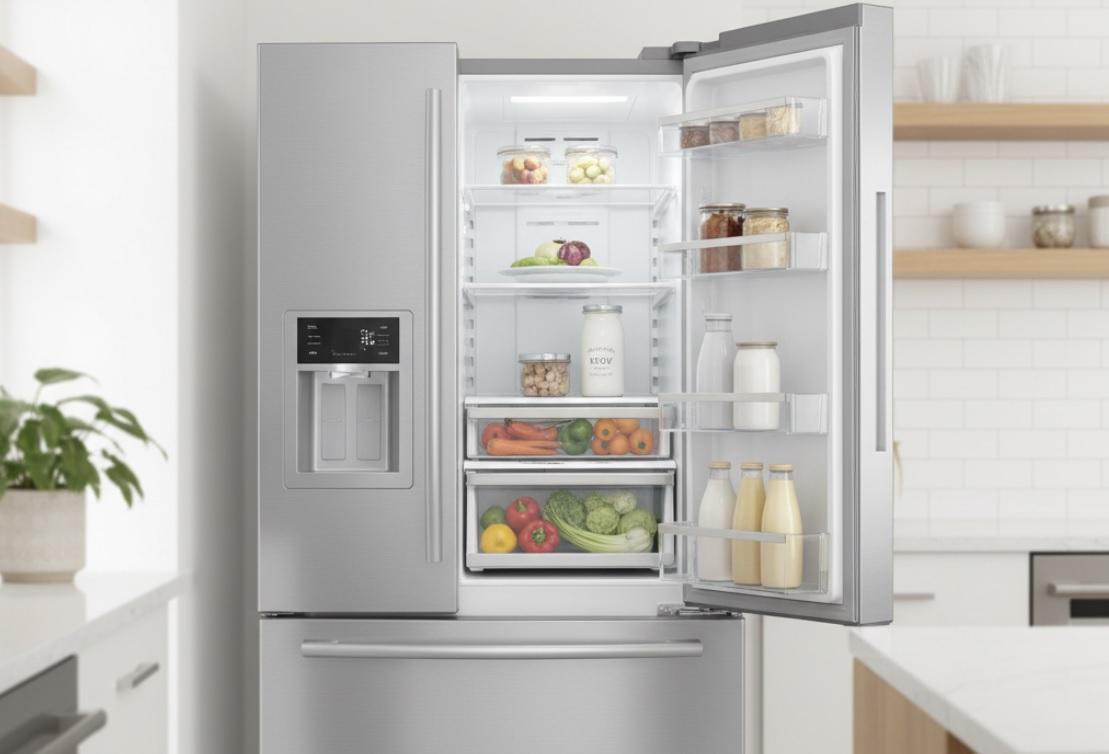
Two doors on top for the fridge, and a pull-out freezer drawer below. This is one of the most popular styles today, especially in modern kitchens.
Pros:
- Wide, open fridge space-great for large items
- Energy efficient (you open one door instead of two)
- Sleek, high-end look
- Often includes smart features and dispensers
Cons:
- Most expensive style
- Heavy doors can be hard for kids to open
- Freezer access still requires bending
If you entertain often or shop in bulk, the wide shelves will make your life easier. Just be ready to pay more upfront and possibly for repairs later.
Compact and Specialty Models
Mini-fridges, under-counter units, or built-in models serve specific needs. A dorm student, a home bartender, or someone remodeling a luxury kitchen might need these.
They're not meant as your main fridge but work well as additions. Built-in models look seamless with cabinetry but cost significantly more and require professional installation.
Size Matters
Refrigerator size is measured in cubic feet. Most households need between 18 and 24 cubic feet. But don't just go for the biggest number.
Consider how many people live in your home:
- 1-2 people: 14-18 cu. ft.
- 3-4 people: 18-22 cu. ft.
- 5+ people: 22-26+ cu. ft.
Also think about your shopping habits. Do you buy groceries once a week? Do you meal prep? Do you freeze a lot of leftovers? Your usage matters more than the number of people.
A huge fridge in a small kitchen can make moving around difficult. And if you rarely fill it, you're just paying to cool empty space.
Key Features to Consider
Modern fridges come with all kinds of extras. Some are useful, others are just marketing gimmicks. Focus on what actually improves your daily life.
Energy Efficiency
Look for the ENERGY STAR label. These models use at least 15% less energy than standard ones. Over 10 years, that can save you hundreds of dollars on electricity.
Also check the estimated yearly energy cost on the bright yellow EnergyGuide label. Compare a few models-it's a quick way to see long-term value.
Water and Ice Dispensers
Many French door and side-by-side models have dispensers on the front. They're convenient but come with trade-offs.
Pros:
- No need to open the door for cold water or ice
- Saves energy (less cold air escapes)
Cons:
- Takes up freezer or fridge space inside
- Requires plumbing-can't be moved easily
- More parts = more things that can break
- Needs regular filter changes (every 6 months)
If you drink a lot of water or use ice daily, it might be worth it. Otherwise, skip it and save money.
Smart Features
Some fridges connect to Wi-Fi, show recipes on a screen, or let you see inside with a camera. These sound cool, but ask yourself: will you really use them?
Smart fridges cost hundreds more and can become outdated fast. They also raise privacy concerns-your fridge shouldn't be tracking your milk habits.
Unless you love tech and have the budget, stick to basic functions that last.
Interior Organization
Shelves, bins, and drawers make a big difference in how easy it is to find and store food.
- Adjustable shelves let you fit tall items like juice bottles or cake stands.
- Spill-proof glass shelves contain messes and are easy to wipe clean.
- Humidity-controlled crisper drawers keep fruits and veggies fresh longer.
- Gallon door bins hold large milk or juice jugs securely.
Open the doors in the store (or check detailed photos online) to see how the inside is laid out. Does it match how you store food?
Noise Level
Not all fridges run quietly. If your kitchen is open to the living room or you have a small home, a loud compressor can be annoying.
Look for models rated under 40 decibels-about as quiet as a library. Brands like LG, Samsung, and Bosch often design for low noise.
Don't Forget the Freezer
Many people focus only on the fridge section, but your freezer matters too. Think about how you use it:
- Do you freeze meals for later?
- Do you buy frozen vegetables, ice cream, or meat in bulk?
- Do you make your own ice or rely on store-bought?
Bottom-freezer and French door models usually have larger, more usable freezer space than side-by-side. Top-freezer units often have the smallest freezers.
Also check if the freezer has separate compartments or just one open space. Organization helps you find things faster and reduces frost buildup.
Brand, Warranty, and Long-Term Value
Some brands are known for reliability, others for flashy features that break quickly. Based on repair data and customer reviews, these brands consistently rank well:
- Whirlpool
- GE
- LG
- Samsung
- Bosch
Whirlpool and GE tend to have simpler designs that last longer with fewer issues. LG and Samsung offer more tech but may have higher repair rates after the warranty ends.
Always check the warranty-most offer 1 year on parts and labor, with 5-10 years on the sealed system (compressor). Extended warranties are usually not worth it unless you're buying a very high-end model.
When to Buy for the Best Deal
Refrigerators go on sale at predictable times. You can save hundreds by timing your purchase right.
- September to November: New models arrive, so stores discount last year's inventory.
- Memorial Day, Labor Day, Black Friday: Major appliance sales events.
- End of the month: Salespeople may offer extra discounts to hit quotas.
Also consider open-box or floor models. These are display units sold at a discount and often come with full warranties. Just inspect them carefully for scratches or dents.
Important Tips
- Test the doors. Open and close them in the store. Are they smooth? Do they feel sturdy?
- Check the lighting. LED lights are brighter, cooler, and last longer than old bulbs.
- Think about future moves. Will this fridge fit in your next home? Oversized models can be hard to resell.
- Read real customer reviews. Look for comments about noise, ice maker issues, or temperature consistency.
- Measure twice. Seriously-bring your tape measure to the store or double-check online specs.
Remember, the priciest fridge isn't always the right choice. Look for one that fits your kitchen, suits the way you live, and keeps running smoothly for years.
FAQ
How long should a refrigerator last?
Most fridges last 10 to 15 years with proper care. Regular cleaning, checking door seals, and not overloading it can help it last longer.
Is a French door fridge worth the extra cost?
It depends on your needs. If you value wide shelves, modern looks, and convenience, yes. If you're on a tight budget or don't need the extras, a bottom-freezer might give you similar benefits for less.
Do I need a water line for my refrigerator?
Only if it has a water or ice dispenser. If you choose a model without those features, you don't need plumbing-just plug it in and go.
Why is my new fridge making noise?
Some sounds are normal-like the compressor humming or ice dropping into the bin. But loud buzzing, clicking, or rattling could mean a problem. Check the manual or call support if it seems unusual.
Can I put a refrigerator in my garage?
Only if it's designed for it. Standard fridges struggle in very hot or cold temperatures. Look for "garage-ready" models with special thermostats if you plan to use it outdoors.
How often should I clean my refrigerator?
Wipe spills right away. Do a full clean every 3-4 months-remove shelves, wash bins, and vacuum the coils at the back or bottom. Clean condenser coils once a year to keep it running efficiently.


