




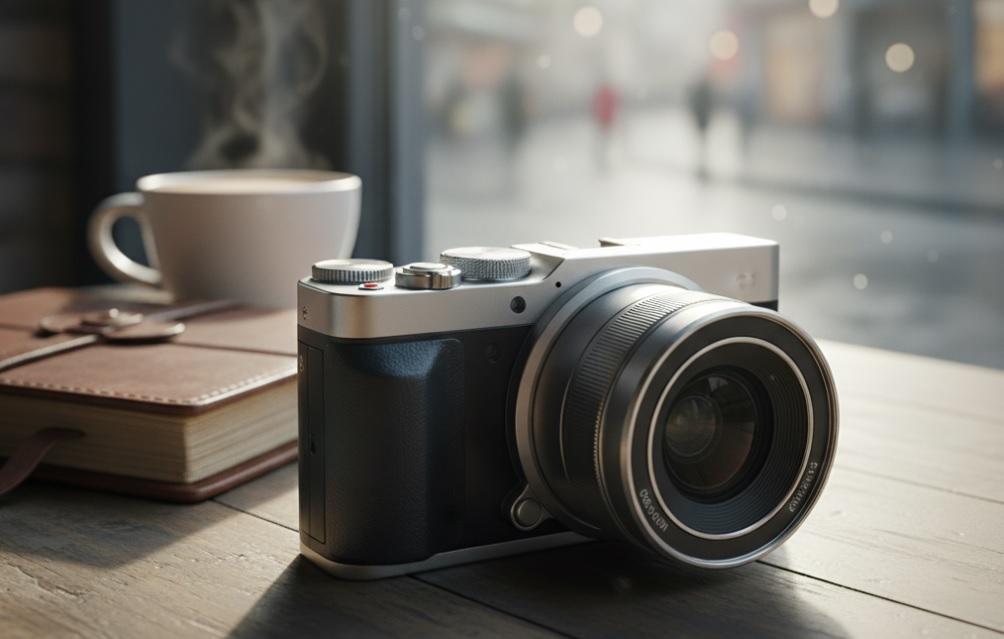
A compact camera is a great way to capture moments on the go. For travel, everyday life, or better photos than your phone, it helps to know what to look for. This guide covers the key features and tips to consider before buying.
Why Consider a Compact Camera?
Smartphones take great photos these days, but they still have limits. A compact camera gives you better image quality, more control, and often a real zoom lens. You don't need to carry heavy gear, and many models fit easily in a jacket pocket or small bag.
You might want a compact camera if:
- You travel often and want something lightweight.
- Your phone camera struggles in low light.
- You want optical zoom without relying on digital cropping.
- You enjoy photography but don't want the complexity of a DSLR or mirrorless system.
Key Features to Look For
Sensor Size Matters
The sensor is the part inside the camera that captures light. Bigger sensors usually mean better image quality, especially in dim lighting. Most compact cameras use either a 1/2.3-inch sensor (common in budget models) or a 1-inch sensor (found in higher-end compacts). Some premium models even offer APS-C sensors, which rival those in larger cameras.
If you plan to print your photos or crop them heavily, go for the largest sensor your budget allows.
Zoom Range and Lens Quality
Compact cameras often brag about huge zoom numbers like "30x" or "60x." Don't get fooled by marketing alone. What really counts is optical zoom-the actual movement of lens elements to magnify your subject. Digital zoom just crops the image and reduces quality.
Look for a camera with at least 3x to 5x optical zoom for everyday use. If you shoot wildlife or distant subjects, consider models with 10x or more. Also check the lens aperture (written as f/2.8, f/3.5, etc.). A lower number like f/1.8 means the lens gathers more light, which helps in darker scenes.
Image Stabilization
Handheld shots can get blurry, especially when zooming in or shooting indoors. Optical image stabilization (OIS) moves parts of the lens or sensor to counteract small hand movements. This feature makes a big difference in real-world use.
Almost every decent compact camera includes some form of stabilization today. Make sure it's optical-not just digital-because digital stabilization often crops your image or reduces resolution.
Manual Controls and Customization
Some compact cameras work like point-and-shoot devices: you press the button and hope for the best. Others let you adjust shutter speed, aperture, ISO, and focus manually. If you want to learn photography or have creative control, look for a model with manual modes.
Check whether the camera has a mode dial, control rings, or customizable buttons. These small features make shooting faster and more enjoyable.
Video Capabilities
Most compact cameras shoot video, but quality varies. If you plan to record clips for social media or family memories, 1080p at 30fps is fine. For more serious use-like vlogging or YouTube-look for 4K video, mic input, and good autofocus during recording.
Keep in mind that not all 4K videos are equal. Some cameras crop the image heavily in 4K mode, which narrows your field of view. Read reviews to see how the camera handles real-world video.
Battery Life and Charging
Battery life is often overlooked until you're stuck without power on a trip. Compact cameras usually last between 200 and 400 shots per charge. That might sound low, but it's normal for small batteries.
Check if the camera uses standard AA batteries or a proprietary rechargeable pack. Proprietary batteries often perform better but cost more to replace. Also, see if you can charge via USB-this is handy when traveling or on the go.
Size and Build Quality
The whole point of a compact camera is portability. Measure the dimensions and weight before buying. Some "compact" models are actually chunky and won't fit in your pocket.
Also consider build quality. Metal bodies feel sturdier than plastic ones. Weather sealing is rare in this category but worth noting if you shoot outdoors in rain or dust.
Types of Compact Cameras
Budget Point-and-Shoots
These cost under $200 and are simple to use. They usually have small sensors, limited zoom, and automatic-only modes. Good for casual snapshots, but don't expect great low-light performance or creative control.
Travel Zoom Cameras
Priced between $200 and $500, these offer 10x to 30x optical zoom in a relatively small body. They're ideal for vacations or city walks. Image quality is decent in daylight but can get noisy in dim light.
Premium Compacts
These range from $500 to $1,000 and feature large sensors (usually 1-inch or APS-C), fast lenses, and full manual controls. Examples include the Sony RX100 series or Fujifilm X100 models. They're perfect for enthusiasts who want DSLR-like quality in a pocketable size.
Rugged and Waterproof Models
If you hike, ski, or spend time near water, consider a tough compact. These survive drops, dust, and even underwater use. Image quality isn't top-tier, but durability makes up for it.
Top Tips Before You Buy
- Try before you buy. Visit a store and hold the camera. Does it feel comfortable? Are the buttons easy to reach?
- Read real user reviews. Professional reviews are helpful, but everyday users often spot quirks that experts miss.
- Check sample photos. Search online for "sample images [camera model]" to see real-world results.
- Consider used or older models. Last year's camera often costs much less and performs almost as well as the newest version.
- Don't ignore your phone. If you mostly share photos online and rarely print them, your smartphone might still be enough.
Common Mistakes to Avoid
Many buyers get excited by megapixel counts. A 20MP camera isn't automatically better than a 12MP one. In fact, cramming too many pixels onto a tiny sensor can hurt image quality. Focus on sensor size and lens quality instead.
Another trap is chasing ultra-zoom cameras without checking low-light performance. A 60x zoom sounds impressive, but if the lens is slow (like f/6.5 at full zoom), your photos will be dark and grainy unless you use flash.
Also, don't assume all compact cameras are truly pocketable. Some "compact" models are closer to small DSLRs in size. Always check the exact dimensions and compare them to your pocket or bag.
How Much Should You Spend?
Your budget shapes your options. Here's a rough breakdown:
- Under $150: Basic point-and-shoots. Good for kids or occasional use. Expect limited features and average image quality.
- $150-$300: Better zoom, improved sensors, and sometimes manual modes. Great for travelers on a budget.
- $300-$600: High-quality lenses, 1-inch sensors, and solid video. Ideal for serious hobbyists.
- $600+: Premium models with top-tier image quality, fast lenses, and pro-level controls. Worth it if photography is a real passion.
Remember, the most expensive camera isn't always the best fit. Think about how you'll actually use it. A $250 travel zoom might serve you better than a $900 premium compact if you're always on the move.
Bottom Line
A compact camera bridges the gap between convenience and quality. It won't replace a full camera system, but it can deliver far better results than a phone in many situations.
You'll know you've found the right one when it feels natural in your hands and makes you want to take more photos - not fewer.
Frequently Asked Questions (FAQ)
Are compact cameras still worth buying in 2024?
Yes, especially if you want better zoom, low-light performance, or manual control without carrying heavy gear. Phones are great, but they can't match optical zoom or large sensors in small bodies.
Can I use a compact camera for professional work?
Some premium compacts are used by pros for street photography, travel, or backup shots. But for studio or commercial work, most professionals still prefer interchangeable-lens cameras.
Do compact cameras have interchangeable lenses?
No. By definition, compact cameras have fixed lenses. If you want to swap lenses, look at mirrorless or DSLR systems instead.
How long do compact cameras last?
With proper care, most last 5-7 years or more. Battery life may degrade over time, but replacement batteries are usually available.
Should I buy new or used?
Used is a smart choice if you find a well-maintained model from a trusted seller. Many compact cameras hold their value and function perfectly for years.
Can I print photos from a compact camera?
Absolutely. Even budget models produce sharp 4x6 or 5x7 prints. Higher-end compacts can create gallery-quality prints up to 11x14 inches or larger.


