




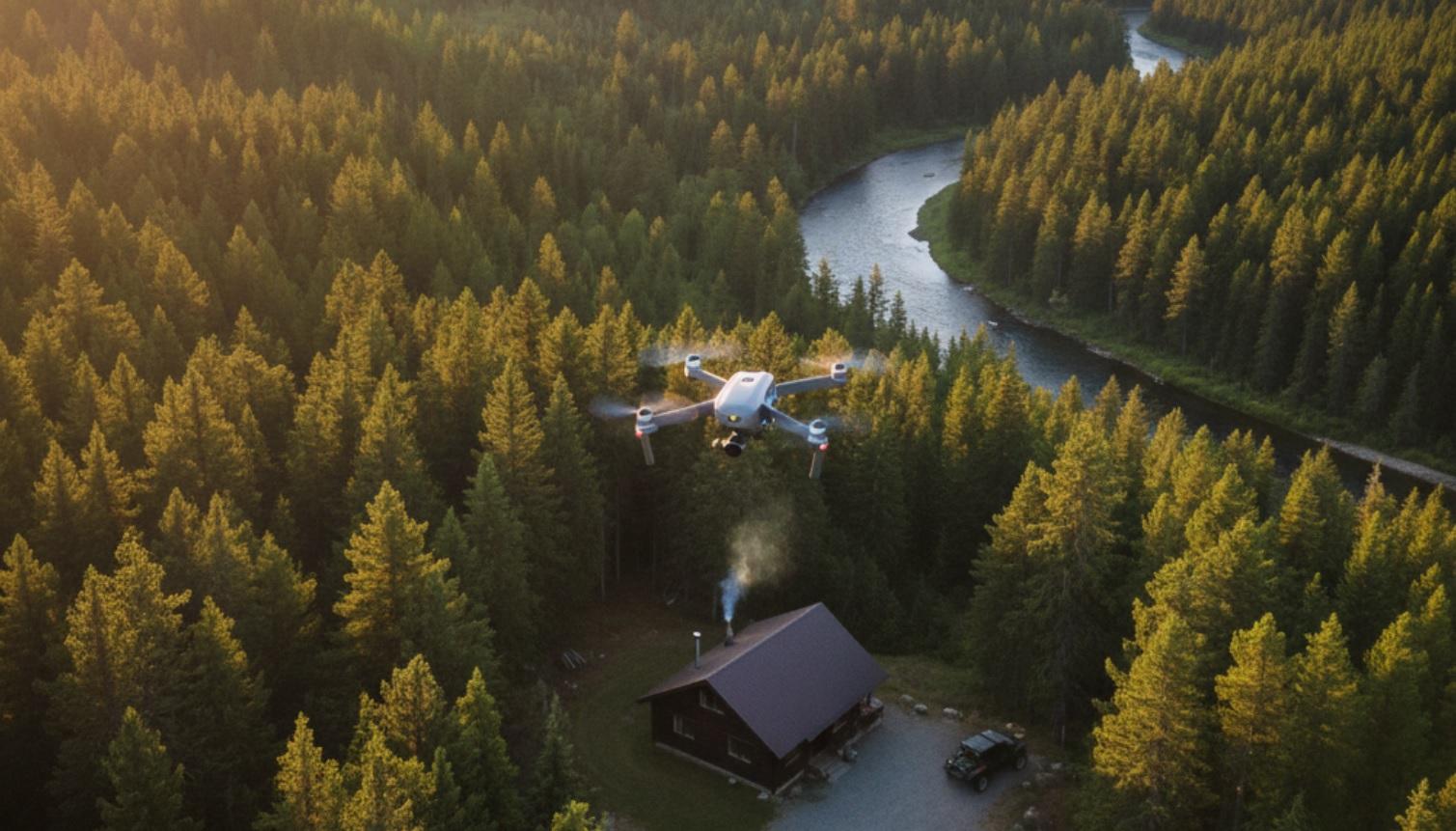
Flying a drone used to feel like science fiction, but now anyone can do it. You might use it for vacation videos, checking your roof, or just having fun outside. With so many models available, it can be hard to choose. This guide explains the key features, prices, and skill levels to help you pick a drone you'll enjoy.
Why Buy a Drone?
You might think drones are only for filmmakers or tech geeks. That's not true. Drones help real people solve real problems. Maybe you want to check gutters without climbing a ladder. Maybe you're planning a wedding and want aerial photos. Or maybe you just enjoy seeing your neighborhood from above.
Here are common reasons people buy drones:
- To take stunning aerial photos and videos.
- To inspect hard-to-reach places like roofs, chimneys, or trees.
- To explore nature or travel destinations from a new angle.
- To learn flying skills or get into drone racing as a hobby.
- To monitor property, farms, or construction sites.
Whatever your reason, knowing your main goal will keep you from overspending on features you won't use.
Know the Rules First
Before you even look at models, check your local drone laws. In many countries, you must register your drone if it weighs over a certain amount-often 250 grams. Some places require a basic test or license to fly.
You also can't fly just anywhere. Airports, national parks, and crowded events are usually off-limits. Flying near people or over private property without permission can get you in trouble.
Always fly responsibly. Respect privacy, keep your drone in sight, and never fly in bad weather. Safety isn't just about rules-it's about being a good neighbor in the sky.
Key Features to Consider
Camera Quality
If you plan to take photos or videos, the camera matters most. Not all drone cameras are equal. Look at resolution first: 1080p is standard, but 4K gives you sharper, more detailed footage. That said, 4K only helps if the sensor and lens are good too.
Check the sensor size if possible. Larger sensors (like 1-inch) capture more light and produce cleaner images in low light. Also look for features like HDR, slow motion, and digital stabilization. Some drones even offer mechanical gimbals-small mounts that keep the camera steady while flying. A 3-axis gimbal makes a huge difference in video smoothness.
Don't forget to ask: Can you control camera settings manually? If you want creative control over exposure or white balance, make sure the drone allows it through its app or remote.
Flight Time and Battery Life
Most drones fly between 20 and 30 minutes on a full charge. That might sound short, but it's normal. What really matters is how many batteries come in the box-and how long they take to recharge.
Some starter drones include only one battery. That means your flight ends after 15 minutes, and you wait an hour to fly again. Better models include two or three batteries, so you can swap and keep going.
Also check if spare batteries are easy to find and affordable. Proprietary batteries can be expensive or hard to replace years later.
Range and Signal Strength
Range tells you how far the drone can fly from you while staying connected. Cheap drones might lose signal after 100 meters. Mid-range models often reach 4-8 km. High-end drones can go even farther.
But don't chase big numbers blindly. In cities or near trees, signal drops faster due to interference. Look for drones with strong transmission systems like OcuSync (DJI) or similar tech that resists dropouts.
Always keep your drone within visual line of sight unless you have special permission. Flying beyond sight is risky and often illegal for hobbyists.
GPS and Smart Features
GPS isn't just for navigation-it enables safety and convenience. With GPS, your drone can hover in place, return home automatically if the battery gets low, or retrace its path if it loses signal.
Smart features like "Follow Me," "Orbit Mode," or "Waypoint Navigation" let you capture cool shots without complex flying. These are great for beginners but also useful for experienced pilots.
Not all drones have GPS. Toy drones often rely only on basic sensors and drift in wind. If you want stable, reliable flight, choose a model with GPS and a good flight controller.
Size and Portability
Drones come in all sizes. Pocket-sized models fold up and fit in a backpack. Larger ones need a dedicated case. Think about where you'll use it. If you hike or travel often, a foldable drone under 250 grams is ideal-it's light, portable, and often exempt from registration.
But smaller drones usually mean smaller batteries and weaker cameras. There's always a trade-off. Decide what matters more: convenience or performance.
Obstacle Avoidance
Crashing is expensive. Good drones use sensors-on the front, back, sides, or even below-to detect trees, walls, or the ground. These sensors help the drone stop or go around obstacles automatically.
Entry-level drones rarely have this feature. Mid-range and pro models often include front and rear sensors. Top-tier drones offer full 360-degree awareness.
If you're new to flying, obstacle avoidance gives you peace of mind. It won't prevent every crash, but it reduces mistakes while you're learning.
Types of Drones
Toy Drones (Under $100)
These are small, lightweight, and fun for indoor or backyard flying. They usually lack GPS, have short flight times (5-10 minutes), and no real camera-or just a low-res one. Good for kids or absolute beginners who want to practice basic controls.
Beginner Drones ($100-$300)
This range offers your first "real" drone. Most include HD cameras, basic GPS, and 15-25 minutes of flight time. Brands like DJI, Holy Stone, and Ryze make reliable models here. Great for teens, hobbyists, or casual travelers.
Mid-Range Drones ($300-$800)
These are the sweet spot for serious hobbyists. Expect 4K video, 3-axis gimbals, 25-35 minutes of flight time, strong GPS, and obstacle sensors. The DJI Mini series and Autel Evo Nano fall here. Perfect for content creators, real estate agents, or weekend adventurers.
Professional Drones ($800 and up)
Built for work, not just play. These offer cinema-grade video, long-range transmission, advanced obstacle avoidance, and sometimes interchangeable cameras. Used by filmmakers, surveyors, and inspectors. Examples include DJI Air 3, Mavic 3, and Autel Evo II.
Racing and FPV Drones
First-person view (FPV) drones are built for speed and agility, not photography. You wear goggles that show a live feed from the drone's camera, making it feel like you're flying. These require more skill and often don't have GPS or return-to-home features. Best for experienced pilots or those interested in drone racing leagues.
What to Avoid When Buying
Don't fall for "5K" or "8K" claims on cheap drones. Those are often upscaled videos, not true high resolution. Stick to trusted brands that publish real sensor and lens specs.
Avoid drones with no GPS if you plan to fly outdoors. Wind can easily blow them off course, and you'll struggle to keep them stable.
Be wary of ultra-cheap "DJI-style" drones on online marketplaces. Many copy the look but use poor components, weak batteries, and glitchy software. You'll save money short-term but regret it when the drone crashes or stops working.
Also, don't ignore the app. A drone is only as good as its companion app. Test reviews to see if the app is stable, easy to use, and regularly updated.
How Much Should You Spend?
Your budget should match your goals:
- Under $100: For learning basics or indoor fun. Don't expect good photos or outdoor reliability.
- $100-$300: Best value for beginners. You get a real camera, GPS, and decent flight time.
- $300-$600: Ideal for travel, social media content, or light professional use. Strong features without breaking the bank.
- $600-$1,200: For serious creators who need 4K/6K video, long range, and advanced safety.
- Over $1,200: Only if you need pro-grade tools for business or filmmaking.
Remember, accessories add up. Factor in extra batteries, a carrying case, ND filters (for smoother video), and maybe a landing pad. Some bundles include these, which can save money.
Top Tips Before You Buy
- Fly a friend's drone first. Nothing beats hands-on experience. See how it feels to control and land.
- Check repair and support. Can you get spare parts? Does the brand offer customer service in your country?
- Read recent reviews. Drone tech changes fast. A model from two years ago might lack key safety updates.
- Consider weight. Drones under 250g often have fewer legal restrictions-big plus for travelers.
- Think long-term. Will this drone still feel capable in a year? Or will you outgrow it quickly?
Bottom Line
Drones let you see the world from a new perspective. The best one isn't the priciest it's the one you'll actually enjoy using. Choose a model that works for you, and start with something simple to get comfortable and avoid accidents.
Flying a drone comes with responsibility. Follow the rules, respect privacy, and stay safe. Do that, and flying becomes a fun and creative experience.
Frequently Asked Questions (FAQ)
Do I need a license to fly a drone?
In many countries, yes-if your drone weighs over 250 grams or you fly for commercial purposes. Check your national aviation authority (like the FAA in the U.S. or EASA in Europe) for exact rules.
Can I fly a drone in my backyard?
Usually yes, as long as you're not near an airport, don't fly over neighbors without permission, and follow local height limits (often 120 meters or 400 feet).
How hard is it to learn to fly a drone?
Modern drones with GPS and auto-hover are very beginner-friendly. Most people feel comfortable after a few short practice sessions in an open field.
Are drones waterproof?
Almost none are. Rain, snow, or even heavy mist can damage motors and electronics. Always check the weather before flying.
Can I use my drone for work?
Yes, but you'll likely need additional certification, insurance, and possibly a different drone model built for commercial use.
What happens if my drone flies out of range?
Most GPS drones automatically return to their takeoff point when signal is lost or battery runs low. Make sure this "Return to Home" feature is enabled before every flight.


